
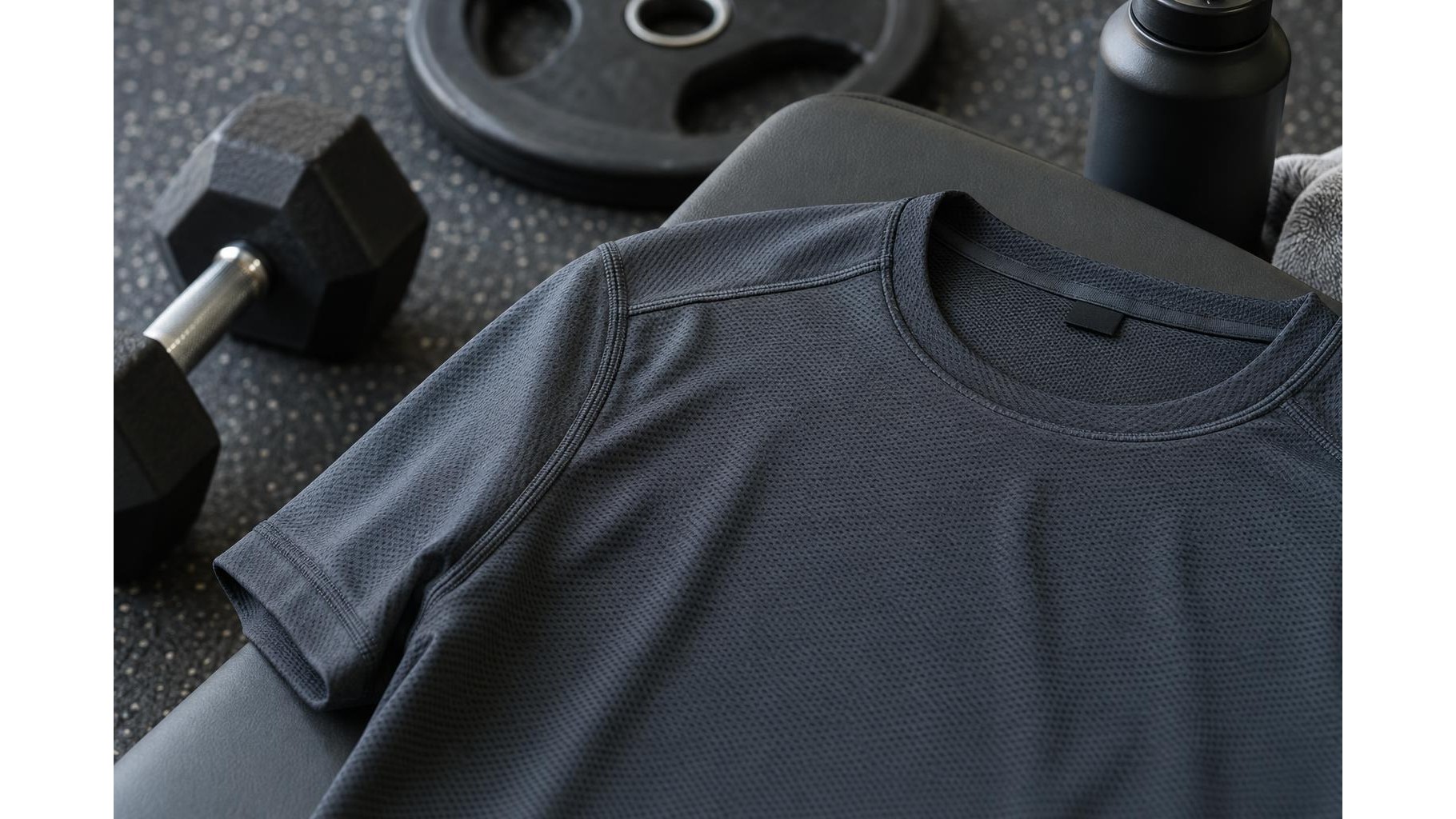
A workout shirt can look smooth on the rack and still develop pills, pulls or rough patches after a few weeks of training. The causes are usually practical: how the fabric is knitted, how its yarns are made, where seams and friction points sit, and whether washing instructions suit your routine. Use these checks when shopping for a durable technical shirt, especially if you train indoors several times a week.
Read the fabric construction, not just the fibre name
“Polyester” or “nylon” alone does not guarantee a long-wearing shirt. Look for a tightly and evenly knitted surface with no loose loops, fuzzy areas or irregular stitches. A smooth jersey or interlock knit often presents fewer exposed fibres for friction to catch than a visibly loose or brushed construction. Stretch fabrics commonly blend in elastane; check that the fabric feels resilient rather than flimsy, and that it returns to shape after a gentle stretch. If the product listing describes a face engineered to resist abrasion or pilling, treat that as a useful clue, not a substitute for examining the garment. For frequent indoor sessions, a light, breathable knit that stays smooth against benches and equipment is often more useful than a heavy fabric.
Consider yarn quality and surface finish
Pilling happens when fibres work loose and form small balls on the surface. Snagging begins when a filament or loop catches on a rough edge. Continuous-filament synthetic yarns tend to have fewer short fibre ends than staple yarns, while tightly twisted yarns can help limit fibre movement. These details may not appear on a clothing label, so check the maker’s fabric description and inspect the surface closely. Avoid shirts that already show fuzz, pulled threads or uneven texture. A smooth hand feel is encouraging, but do not assume a silky finish proves durability: a very thin fabric may still be vulnerable where it rubs against a bar, bench or backpack strap.
Check seams and likely friction zones
Turn the shirt inside out if possible. Look for flat, even stitching, secure seam ends and no loose thread loops that could catch during use. Flatlock seams can reduce chafing, but seam quality and placement matter more than the label alone. Underarm and side seams should not sit where they are likely to rub against equipment or restrict arm movement. Also inspect the collar, sleeve hems and areas around any printed or bonded details. For indoor training, repeated contact with benches, cable attachments and machine upholstery can wear the same spots session after session. A well-fitted shirt that does not bunch or drag can reduce that unnecessary friction.
Use the care label as a durability guide
Before buying, check the care instructions and choose a shirt you can maintain consistently. A label that recommends a cool wash and low-heat or air drying is practical for frequent use. High temperatures, fabric softener and rough washing can weaken fibres or leave residues that affect moisture management. Wash technical tops inside out with similar lightweight garments, fasten zips and hooks in the same load, and avoid washing them with towels or items with abrasive trims. Do not overload the drum: garments need room to move without excessive rubbing. Follow the label if it gives specific instructions, since fibre blends and finishes vary.
Match the shirt to frequent indoor sessions
For regular gym use, prioritise a smooth, close but comfortable fit, dependable stitching and fabric that dries promptly between sessions. Very loose fabric may catch on equipment; an excessively tight fit can place extra strain on seams. Check sizing information and consider whether the shirt stays in place when you reach overhead, row or lie on a bench. If you train on consecutive days, owning several tops can reduce the wear caused by repeated washing and ensure each garment dries fully. Rotate shirts rather than relying on one favourite, and retire a top from equipment-heavy workouts if a seam starts to open or a snag begins to spread.
Choose carefully and extend its useful life
The best defence against pilling and snagging is a combination of compact fabric construction, resilient yarns, tidy seams and sensible care. Inspect the knit and stitching, check for clear material and washing information, and think about how the shirt fits your training movements. After purchase, turn it inside out, wash it gently, keep it away from rough laundry and air dry when the label permits. These small habits limit avoidable abrasion and help a technical shirt stay comfortable and presentable through many indoor workouts.









