
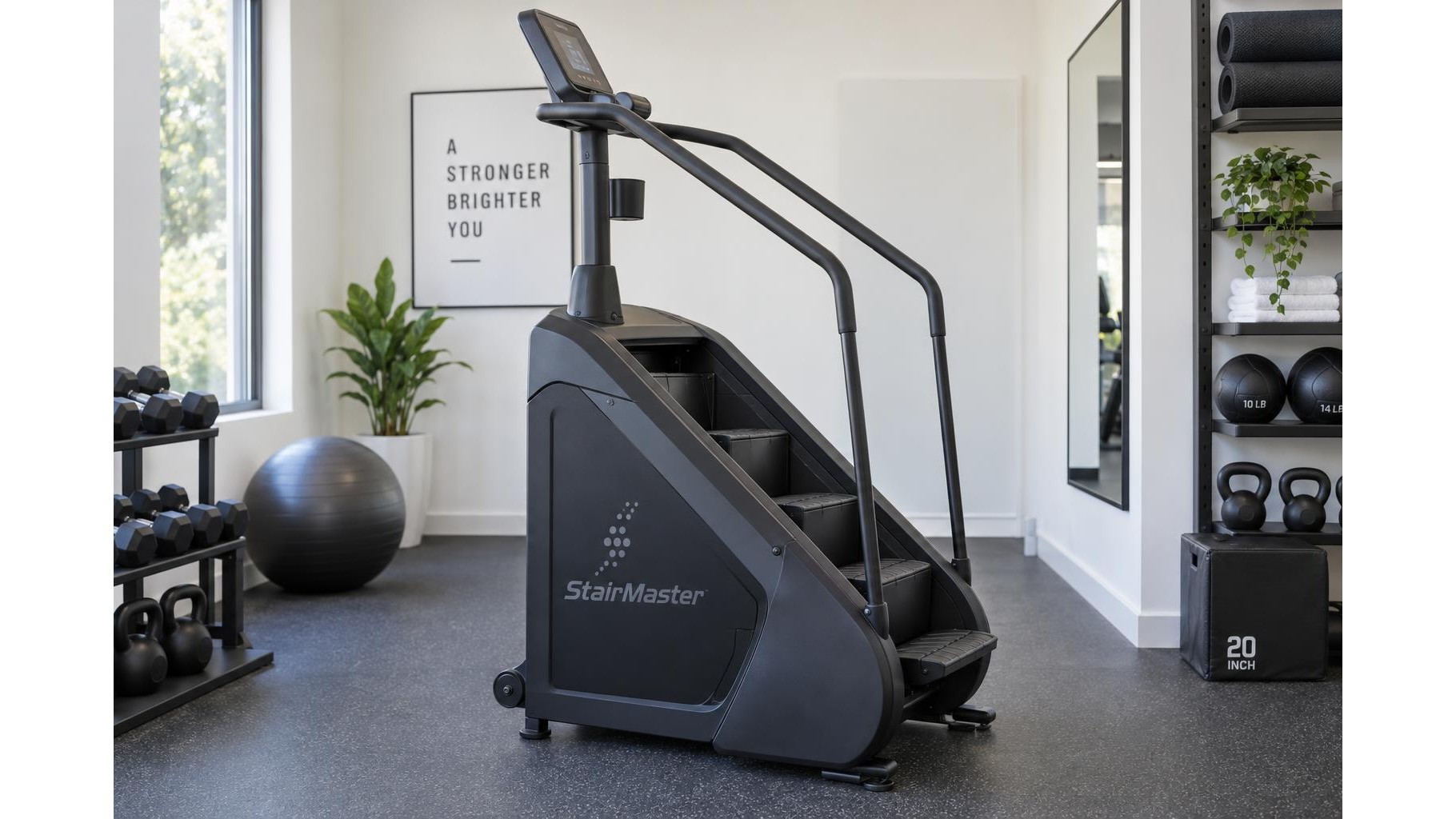
A compact stair climber can add demanding, low-impact cardio to a small home gym, but a short footprint alone does not guarantee a comfortable workout. Compare the movement path, pace, resistance and support together: these determine whether the machine suits your stride, fitness level and available space. Use the checklist below to assess models before buying, and prioritise measured specifications over vague claims such as “full-body” or “commercial feel.”
Start with step geometry
Step height describes how far each pedal travels vertically; step depth affects how much of your foot is supported. A high, deep step can feel closer to climbing stairs and recruit the hips and glutes through a larger range, but it may be uncomfortable for shorter users or beginners. A shallow stroke can be easier to learn, though it may feel more like quick stepping than climbing. Check whether the pedals move independently or follow a linked path, then compare the listed travel with your natural stride. If possible, try the machine: your heel should remain supported and your knee should not feel forced into an awkward position.
Match cadence to your training
Cadence is the number of steps per minute. A broad, clearly specified cadence range gives you room for steady aerobic sessions, intervals and gradual progression. Look for a console that displays steps per minute or a similarly useful measure; a speed level without an explanation is harder to compare. Check how the machine responds when you change pace: pedals should move smoothly rather than lurch, and the display should keep up. For interval training, quick adjustments matter more than an impressive maximum number that you cannot maintain with good form.
Understand resistance settings
Resistance can come from hydraulic cylinders, magnetic systems or another mechanism, and the number of settings is only part of the story. Compare how easily the resistance changes, whether levels are distinct, and whether the manufacturer explains what they mean. Higher resistance increases muscular effort, while a faster cadence raises cardiovascular demand; combining both at once may compromise control. A useful machine lets you build intensity progressively without making the pedals feel sticky or uneven. Also check whether resistance changes are available during exercise or require stopping to adjust a dial.
Assess handrails and stability
Handrails can help with balance, especially for new users, but leaning heavily on them reduces the work your legs and trunk do. A stable climber should remain planted during normal stepping, with a wide enough base and secure feet for the intended floor. Review the maximum user weight, frame construction and any instructions about levelling or floor protection. If the model has a handlebar, check its height and grip position against your posture. A compact frame that rocks, flexes or slides is not a good trade-off for saved floor space.
Measure the footprint and use this checklist
Measure the machine’s operating footprint, not just its stored dimensions. Allow clearance around the frame and above the user’s head, and account for any rails that project beyond the base. Consider weight and whether the unit can be moved or stored safely between sessions. Before choosing, check:
- Step path: height, depth and comfortable foot support
- Cadence: useful range, smooth transitions and readable feedback
- Resistance: adjustable levels with predictable changes
- Stability: secure base, suitable user-weight limit and appropriate rails
- Space: working clearance, storage needs and floor protection
For a small home gym, the best compact stair climber is the one that fits both your room and your movement. Compare step geometry for comfort, cadence and resistance for training variety, and rails and frame stability for confident use. Measure first, verify specifications, and choose a machine that lets you maintain controlled technique as effort rises.









