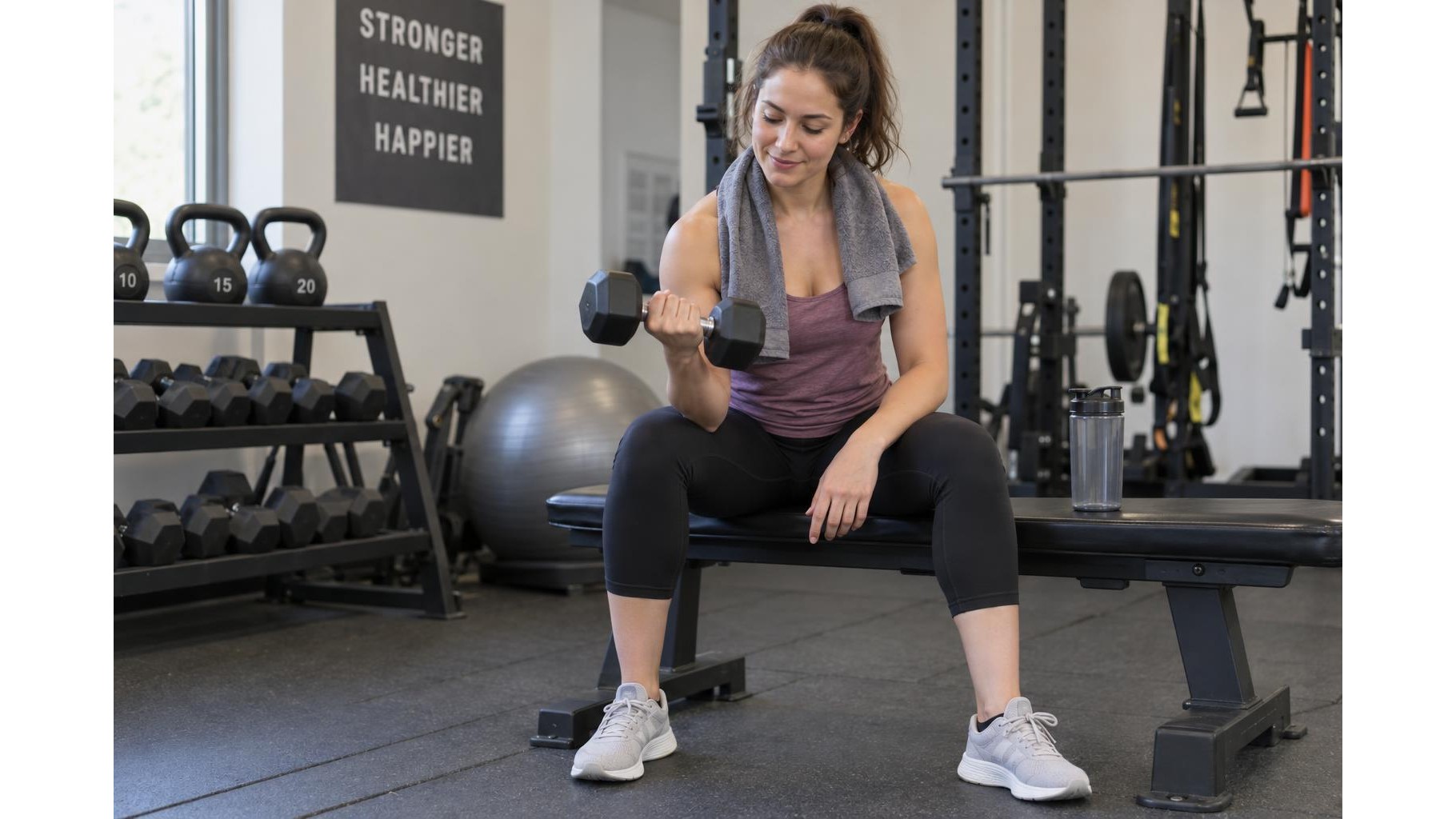
Elbows can feel stiff after a demanding session of presses, rows, pull-ups or curls. If the discomfort is mild and movement remains comfortable, a short, easy routine may help you restore motion without adding more training stress. This is not a diagnosis or a treatment for an injury: keep every movement gentle, and stop if pain sharpens, spreads or worsens.
Start with a symptom check
Before moving, notice how your elbow feels at rest and during ordinary tasks. Mild stiffness is different from significant pain, swelling, bruising, numbness or a sudden loss of strength. If symptoms are severe, followed an injury, or make it difficult to use the arm, skip the routine and seek medical advice. Otherwise, keep discomfort low and manageable; there should be no forcing through pain. Try five slow repetitions of bending and straightening the elbow within an easy range, then pause and check how it responds.
Use comfortable elbow motion
Sit or stand with your upper arm relaxed beside your body. Slowly bend the elbow, bringing your hand toward your shoulder only as far as feels easy, then straighten it without locking forcefully. Complete six to ten repetitions at an unhurried pace. Next, keep the elbow tucked near your side and turn your palm up and down through a comfortable range. Do five to eight repetitions. These movements should feel smooth, not like a stretch you have to fight. Reduce the range or stop if symptoms increase.
Add light mobility, not a hard stretch
For a gentle forearm stretch, extend one arm in front with the elbow slightly bent. Turn the palm down and, only if comfortable, use the other hand to guide the wrist a little toward the floor. Hold for about ten seconds, breathing normally, then release. Repeat once on the other side if it feels appropriate. You can also turn the palm upward and explore a mild stretch in the opposite direction. Avoid bouncing, pulling hard or holding a position that causes tingling or sharp pain. A stretch is optional; easy motion is enough.
Scale back aggravating training
For the next few sessions, reduce the load, sets or training frequency of movements that reliably provoke symptoms. Consider temporarily using a shorter range, a neutral grip or a variation that feels comfortable, and avoid repeated heavy efforts near failure. Pressing and pulling do not need to be removed automatically, but pain that builds during a set or lingers more afterward is a reason to stop or modify that exercise. Keep other training that does not aggravate the elbow, and increase workload gradually only when symptoms remain settled during and after exercise.
Know when to get assessed
Arrange professional assessment if elbow pain persists, keeps returning, worsens despite reducing the provoking load, or interferes with sleep and everyday activities. Seek prompt medical care for major swelling or bruising, a deformity, a hot or red joint with fever, sudden severe pain, inability to bend or straighten the arm, or new numbness or weakness. A clinician or physiotherapist can assess the cause and help you plan a suitable return to training. Do not rely on this routine to manage symptoms that are progressing.
Keep recovery gradual
After pressing or pulling, a few minutes of comfortable elbow and forearm movement may be a sensible way to ease stiffness, provided symptoms are mild. Use a small range, light effort and a response-led approach: if the elbow feels worse, stop and scale back. Resume challenging work progressively rather than testing it with another heavy session. Persistent or worsening symptoms deserve professional advice, so you can return to training with a clearer plan.