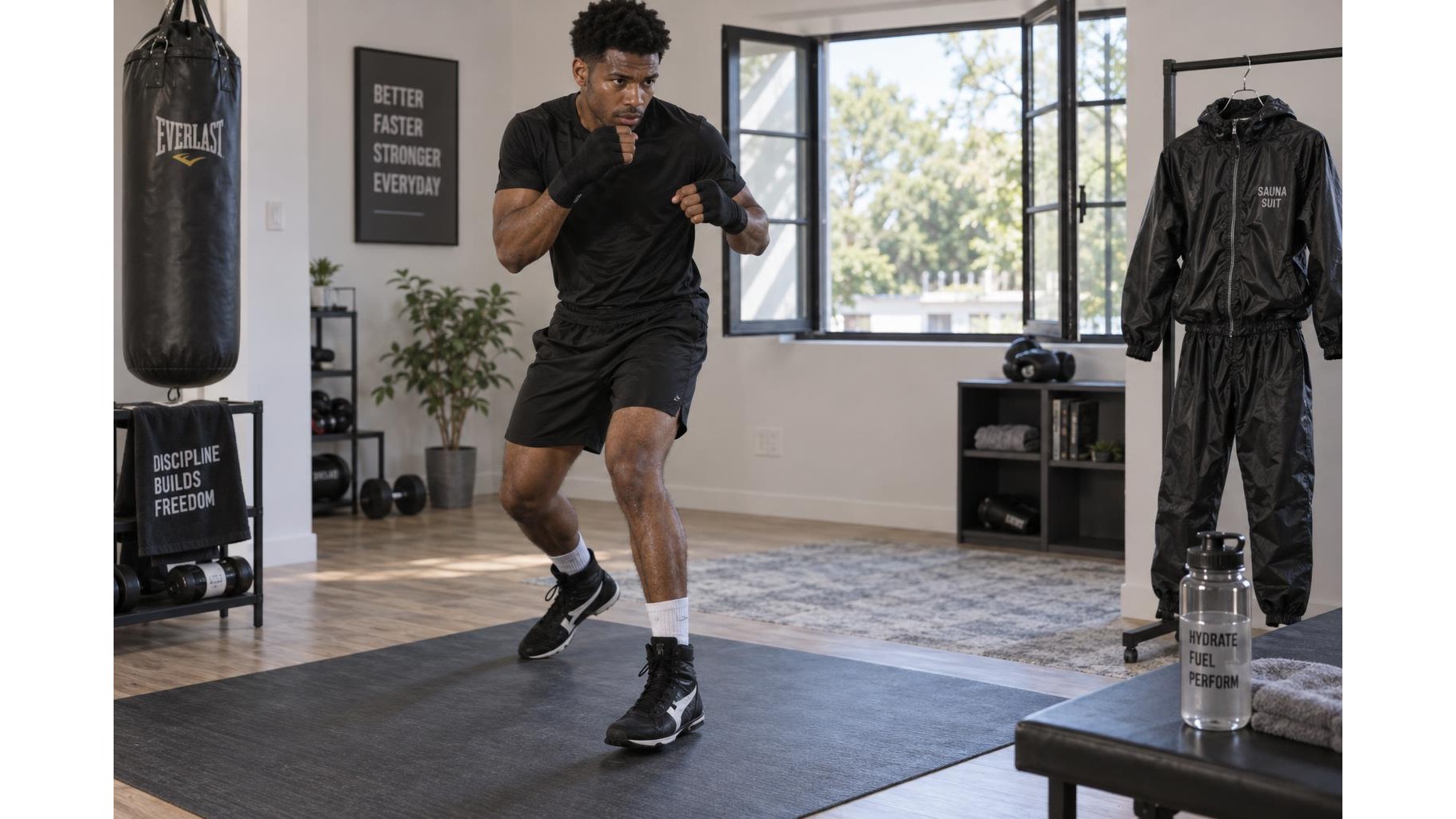
A sauna suit can make an indoor boxing session feel hotter and leave you drenched in sweat, but it is not essential equipment and it does not make a workout more effective for fat loss. If you are considering one, prioritise a safe fit, comfortable movement and sensible heat management over claims about rapid weight reduction. Here is what to look for before using a suit at home.
Start with fit and freedom of movement
Boxing involves quick footwork, torso rotation, punches and repeated changes of direction. Choose a suit that allows you to shadowbox, squat and raise your arms without pulling at the shoulders, waist or crotch. A close fit can help keep excess fabric out of the way, but it should not compress your chest or restrict breathing. Check the sizing chart and garment measurements rather than assuming your usual clothing size will fit. If you plan to wear it over training clothes, allow room for that layer without making the suit loose enough to snag.
Compare fabric and construction
Sauna suits are commonly made from coated synthetic fabrics such as polyester or nylon, designed to limit heat and moisture escaping. These materials can be easy to wipe down, but they may feel clammy and can trap heat. Inspect seams, cuffs, waistband and zip closures: these are high-stress areas during repeated boxing movements. A well-finished suit should not have sharp edges or weak stitching, and closures should stay secure without digging into the skin. Treat very low-cost or unusually thin options cautiously if the construction looks fragile.
Look for useful ventilation
Ventilation is a safety consideration, not a flaw. Some designs use mesh panels or openings to let heat escape; others are more fully enclosed and can become uncomfortable quickly during vigorous indoor exercise. For a warm room, beginners or longer sessions, a less insulating design—or ordinary breathable workout clothing—may be the more sensible choice. Do not cover vents or add extra layers to intensify sweating. Stop exercising if you feel faint, confused, nauseated, unusually weak or develop a headache, and move to a cooler space.
Understand sweat, weight and fat loss
Heavy sweating is not the same as fat loss. Sweat mainly reflects the body’s effort to cool itself. Any immediate drop on the scales after wearing a sauna suit is largely fluid loss and can return when you rehydrate. It is not a reliable measure of workout quality or lasting progress. Use boxing sessions to build fitness and skill, and support body-composition goals with consistent training, food choices and recovery rather than trying to force extra sweating. Avoid sauna suits for rapid weight cuts, particularly without qualified medical or coaching supervision.
Plan hydration and care
Drink fluids before and after training, and take breaks as needed; for longer or particularly sweaty sessions, follow appropriate hydration guidance for your needs. Do not wait for severe thirst, and do not use the suit if you are ill, already dehydrated or exercising in a hot room. After each session, follow the care label: rinse or wipe the inside, wash as directed with mild detergent, and air-dry completely before storing. Avoid high heat or harsh cleaners unless the manufacturer explicitly allows them, as these can damage coatings and seams.
Choose comfort over extra heat
The best choice is a suit that fits securely, moves with you, has durable construction and can be cleaned easily. Ventilation and conservative session length matter more than maximising sweat. If a suit makes indoor boxing uncomfortable or raises safety concerns, train in standard breathable clothing instead. Focus on consistent practice, hydration and recovery—not temporary water loss—for a safer and more useful home workout.