Training at home can make it easier to build a routine, but nutrition advice often turns eating into a numbers game. Protein and calorie tracking can help you understand whether your meals support your goals; it does not need to mean weighing every bite or aiming for perfect data. A flexible approach starts with sensible estimates, regular habits and attention to how you feel and perform.
Estimate protein needs, then make them practical
Protein supports muscle repair and growth, but individual needs vary with body size, training, age and overall diet. A commonly used range for adults who exercise regularly is around 1.2–2.0 grams per kilogram of body weight per day. This is a broad guide, not a prescription: someone new to strength training may do well toward the lower end, while demanding training or a calorie deficit can make the upper end more relevant. If you have a medical condition, are pregnant, or have been advised to limit protein, ask a qualified health professional before changing your intake. Rather than trying to hit a precise number at every meal, include a useful protein source across the day: for example, beans, lentils, tofu, eggs, dairy, fish or lean meat.
Track to learn, not to chase perfection
A short period of logging meals can reveal patterns: perhaps breakfast contains little protein, portions are smaller than expected, or snacks add up without keeping you satisfied. Record meals honestly and consistently, including cooking oils, drinks and snacks when practical. Nutrition databases and food labels are estimates, and restaurant portions can be hard to judge, so treat totals as approximate feedback, not a score. If logging increases anxiety, guilt or rigid behaviour, stop and use a simpler method, such as a brief meal diary or a plate-based routine. The purpose is to make a helpful decision, not to earn approval from an app.
Adjust calories to match your goal
Calories matter because body-weight trends reflect energy intake and expenditure over time, but daily needs fluctuate. For gradual fat loss, a modest, sustainable reduction is generally more practical than severe restriction; for weight gain, a small surplus may support training and recovery. If your aim is maintenance, consistent habits and a stable trend matter more than an exact daily target. Use several weeks of context rather than reacting to one weigh-in: water, salt, digestion and menstrual cycles can all affect scale readings. Pair weight trends with training performance, hunger, sleep and energy before deciding whether to adjust portions.
Build meals around whole foods
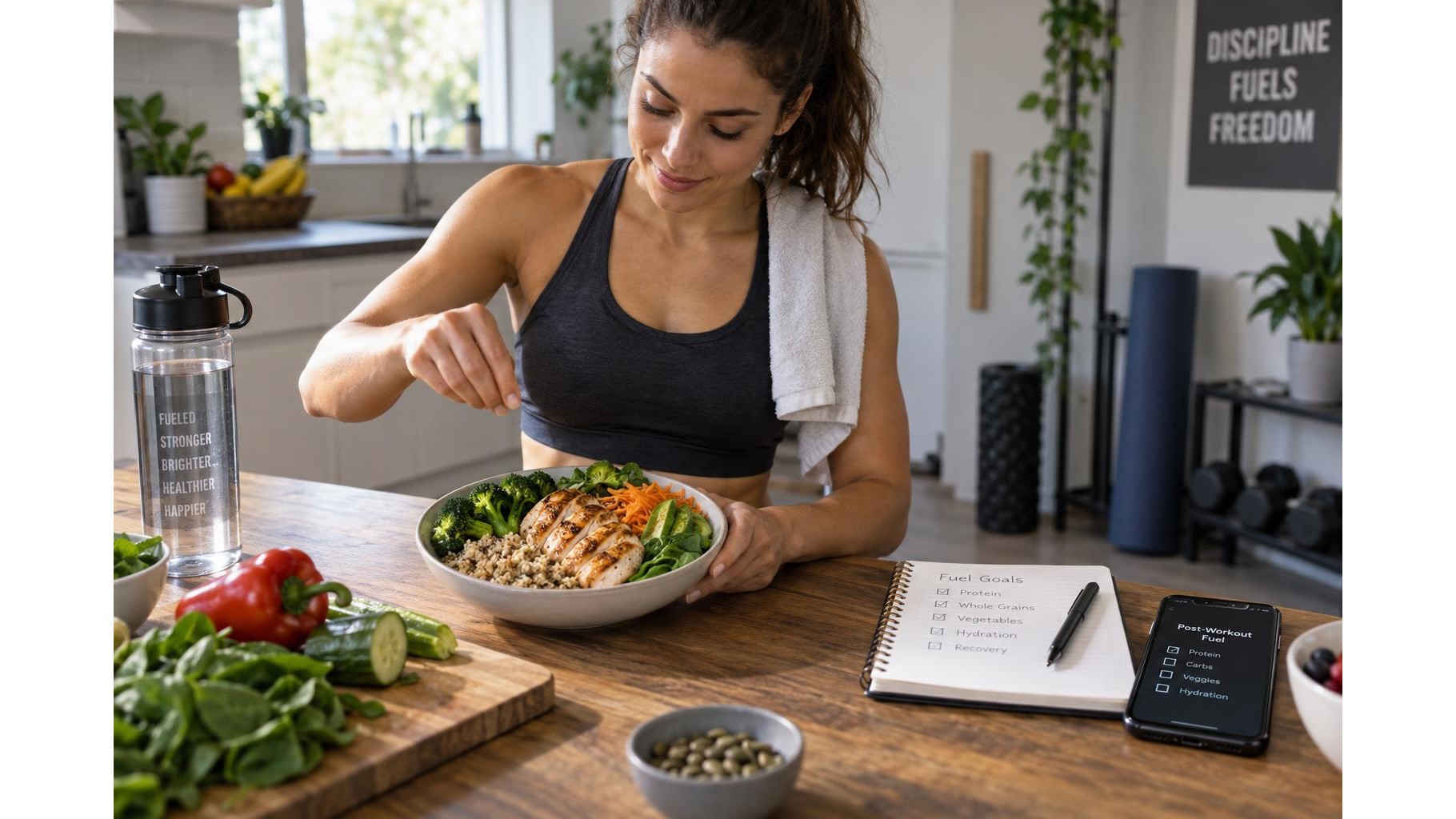
Tracking works best alongside satisfying meals, not instead of them. Base most meals on vegetables or fruit, a protein-rich food, a fibre-rich carbohydrate such as oats, potatoes or whole grains, and a source of fats. These foods can provide nutrients and help with fullness while leaving room for convenience foods and meals out. A simple visual guide is to fill roughly half your plate with produce, then divide the rest between protein and carbohydrates, adapting portions to appetite and training. This is a starting point, not a rule: needs differ, and no single food has to be labelled as good or bad.
Review your routine and seek support when needed
Give changes time to work. Review your meal pattern, average intake and training progress after a few weeks, then make one modest adjustment if needed. Home athletes can also plan food around workouts: a familiar meal or snack containing carbohydrates and protein before or after training may be convenient, but exact timing is usually less important than meeting overall needs. For personalised targets, persistent fatigue, unexplained weight changes, digestive symptoms or a difficult relationship with food, consult a registered dietitian or clinician. Professional guidance can help make nutrition safer and more suited to your circumstances.
A balanced approach that lasts
In short, use protein estimates and calorie tracking as temporary or occasional tools for insight, not as demands for daily perfection. Choose mostly nourishing whole foods, distribute protein through the day, and make gradual changes in line with your training goal. Keep an eye on wellbeing as well as numbers, and seek qualified advice when personal health needs call for it. A routine you can sustain is more valuable than a perfect log you cannot live with.