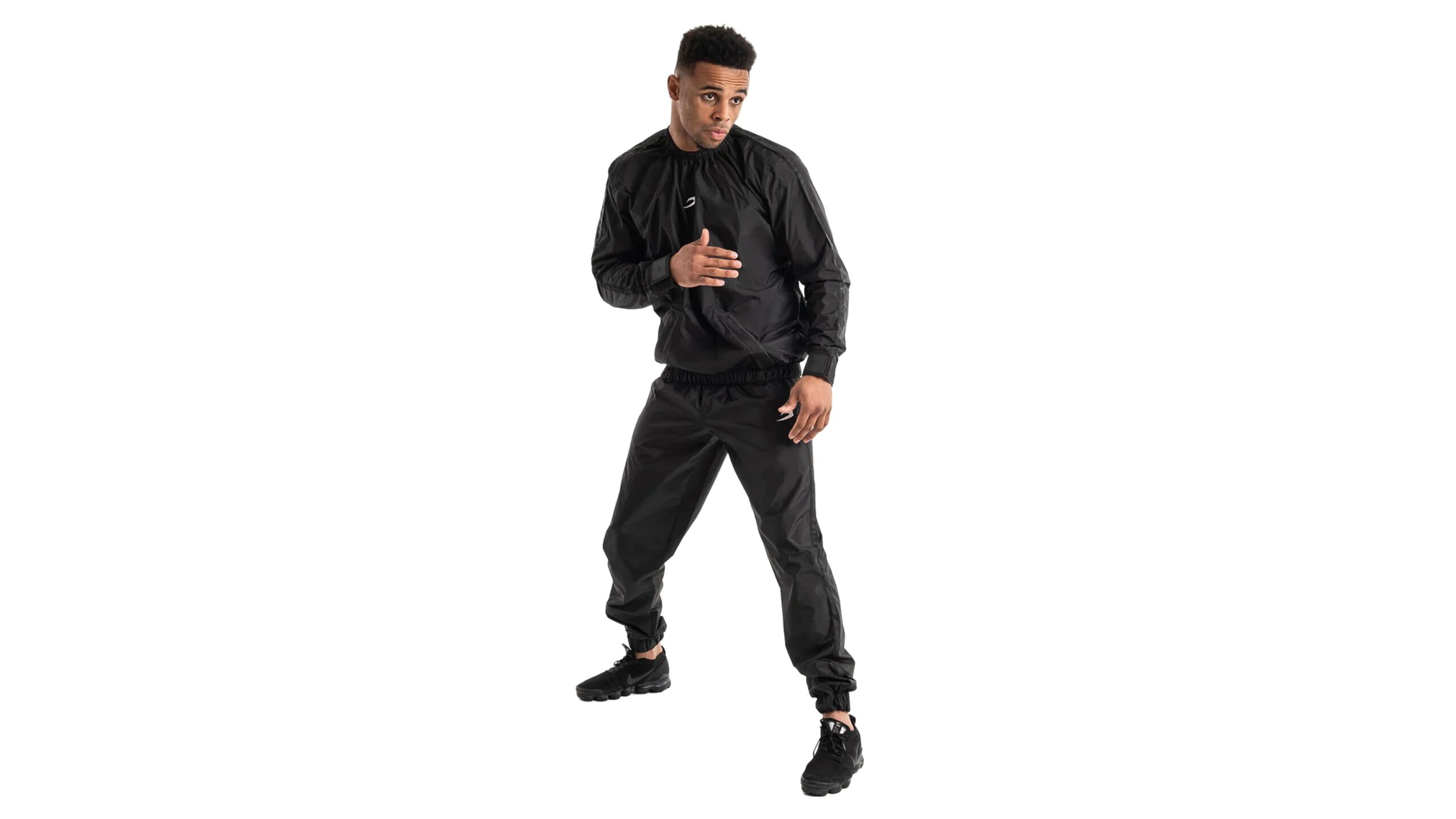
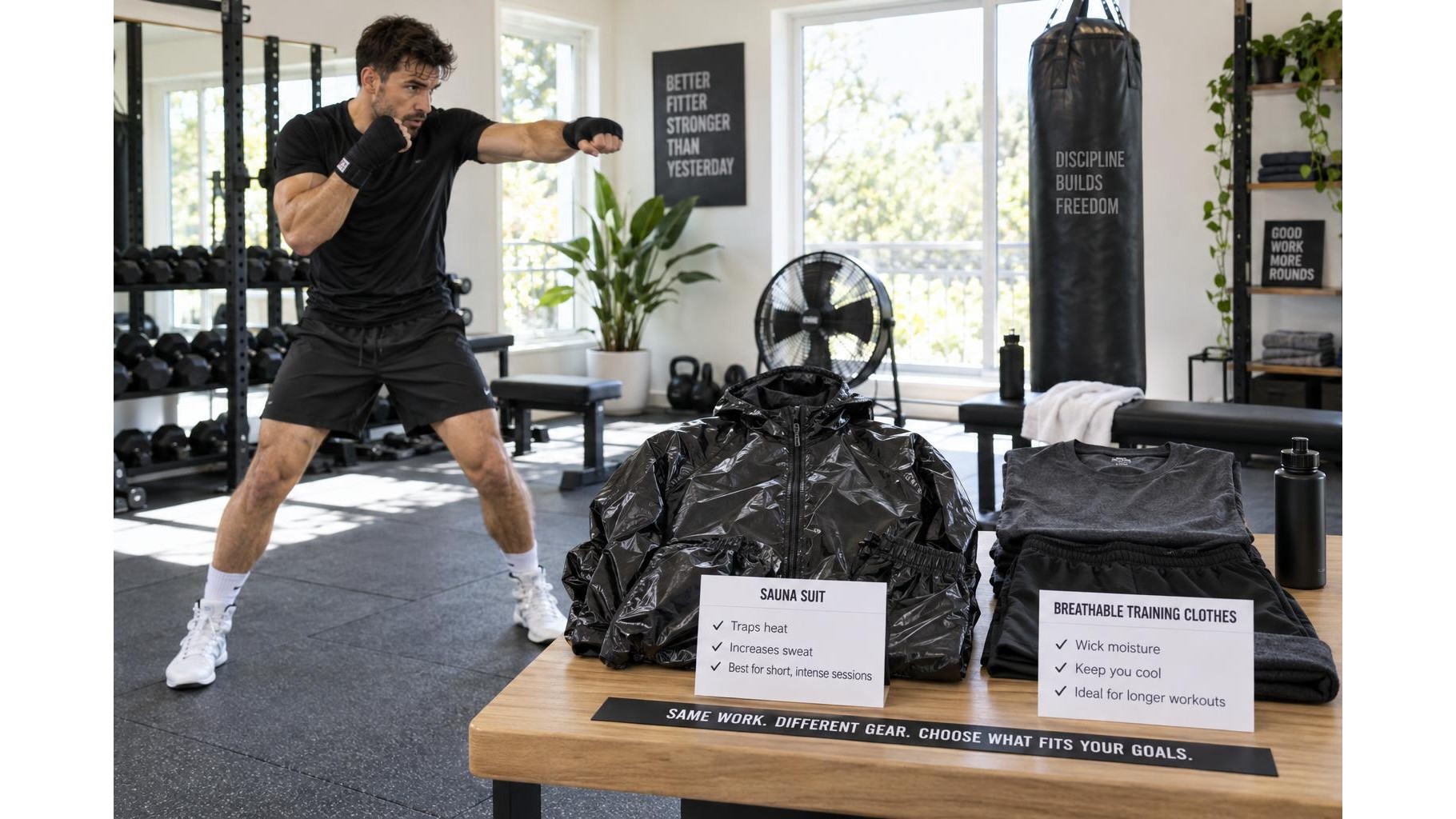
A sauna suit may seem like an easy way to intensify a home boxing workout, but it mainly makes you sweat more by limiting heat loss. It does not make your body burn more fat, and wearing one can increase the risk of overheating and dehydration. Before buying, consider fit, material, ventilation and care—and decide whether the added heat is appropriate for your training and health.
Choose a fit that allows you to move
Boxing involves quick footwork, pivots, punches and changes of level, so a suit must not restrict your range of motion. Check the brand’s size chart and compare it with your chest, waist, hip and inseam measurements; sizing can vary between manufacturers. The suit should sit comfortably over your usual training clothes without pulling across the shoulders, crotch or knees. Sleeves and trouser legs should stay in place during movement, while cuffs and waistbands should not dig into your skin. Avoid sizing down in the hope of increasing sweat: a tight suit can hinder movement and make the workout less comfortable. Try basic shadowboxing movements before using it for a full session.
Understand the material and construction
Most sauna suits use lightweight synthetic fabrics, often polyester or nylon with a coating, to reduce breathability and hold warmth. That is the source of the extra sweating—not a special fat-burning property. Look for clear product information about fabric, seams and closure quality. Reinforced stitching can help the garment withstand repeated movement, while a smooth lining may make it easier to put on over workout clothes. The material should not feel brittle, excessively stiff or irritating against the skin. Remember that a less breathable fabric also traps heat, so it is not automatically better for boxing. Do not use a suit with a torn coating or damaged seams.
Consider ventilation and workout intensity
Some designs include mesh panels, vents or adjustable openings; others are deliberately close-fitting and poorly ventilated. For indoor boxing, where vigorous rounds can quickly raise body temperature, favour a design that lets you open or remove layers easily. A sauna suit is not protective equipment and should not be treated as a way to improve conditioning. Start without it, and if you choose to try one, use it only for a short, low-intensity session in a cool, well-ventilated room. Stop immediately if you feel dizzy, nauseated, weak, confused, unusually breathless or develop a headache. Do not wear it in a hot room or combine it with deliberate fluid restriction.
Keep hydration and safety in focus
More sweat means more fluid loss, not more body fat lost. Any quick drop on the scale after a sweaty workout is mostly water and returns when you rehydrate. Drink according to thirst and your usual exercise needs; do not try to “make weight” by dehydrating yourself. People with heart, kidney or blood-pressure conditions, those who are pregnant, and anyone taking medicines that affect heat regulation should seek medical advice before exercising in a sauna suit. Never wear one during sleep, and avoid using it for long sessions or unsupervised high-intensity training. Stop and cool down if you feel unwell.
Check care instructions before buying
Sweat can leave odour and residue in synthetic fabric, so a suit that is easy to clean is more practical for regular home use. Follow its label: many garments need a gentle wash with mild detergent and air-drying, while high heat, bleach or fabric softener may damage coatings and seams. Rinse or wash it promptly after training and let it dry completely before storing it. Inspect zips, stitching, cuffs and the fabric coating regularly. If the material becomes sticky, cracked or damaged, replace the suit rather than relying on it for another workout.
In short, choose a sauna suit for comfortable movement, sound construction and manageable ventilation, not for promised fat loss. Extra sweating only increases fluid loss, so use caution, keep sessions modest and prioritise hydration. For most home boxing workouts, breathable training clothes and consistent exercise are the simpler, safer choice.