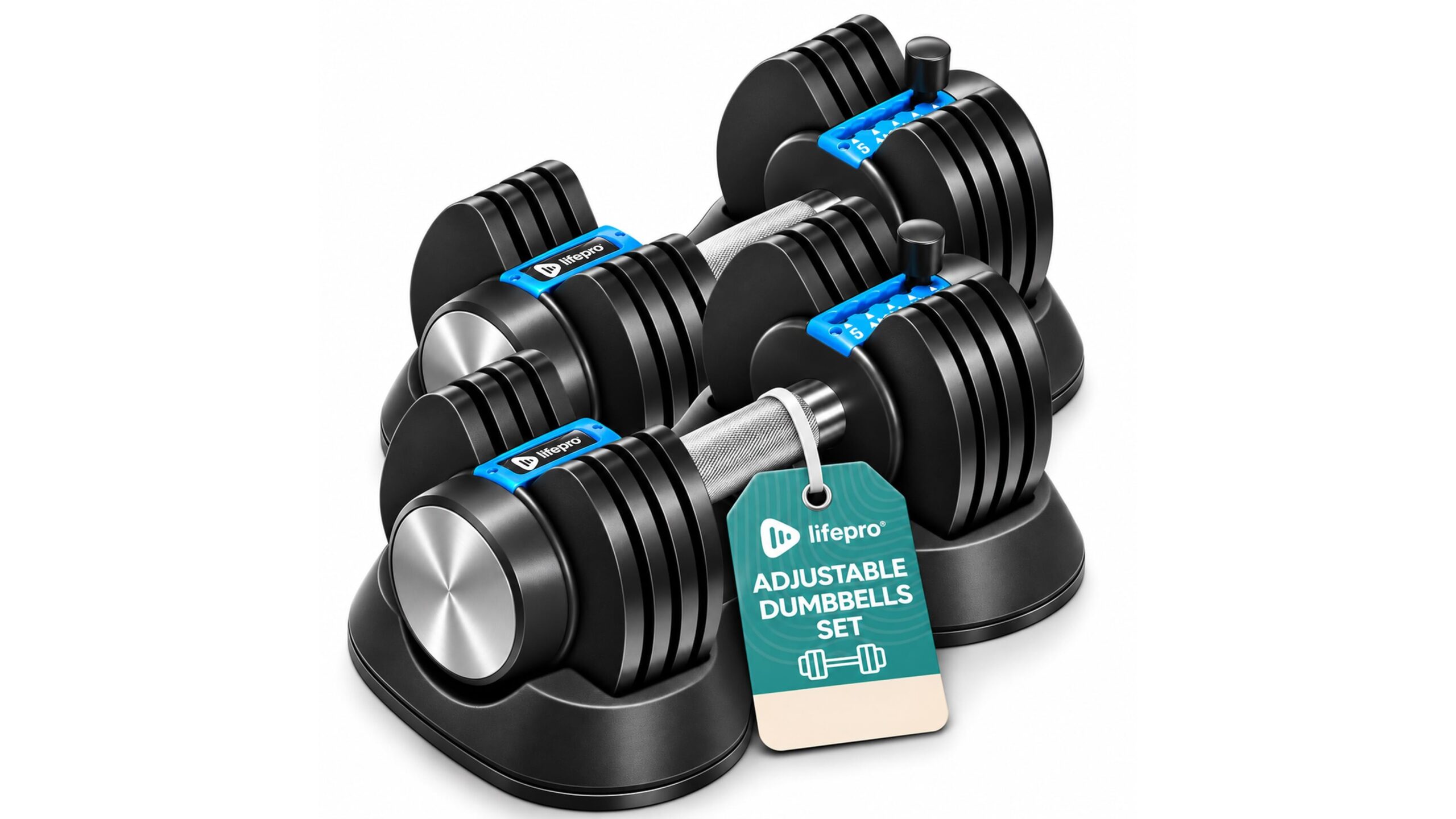
A compact adjustable dumbbell set can make strength training practical when space, budget or equipment storage is shared. The right pair should suit the strongest and newest lifter in the household, change weight without fuss, and stay secure between exercises. Use this guide to compare the details that matter before buying.
Choose a mechanism that fits your routine
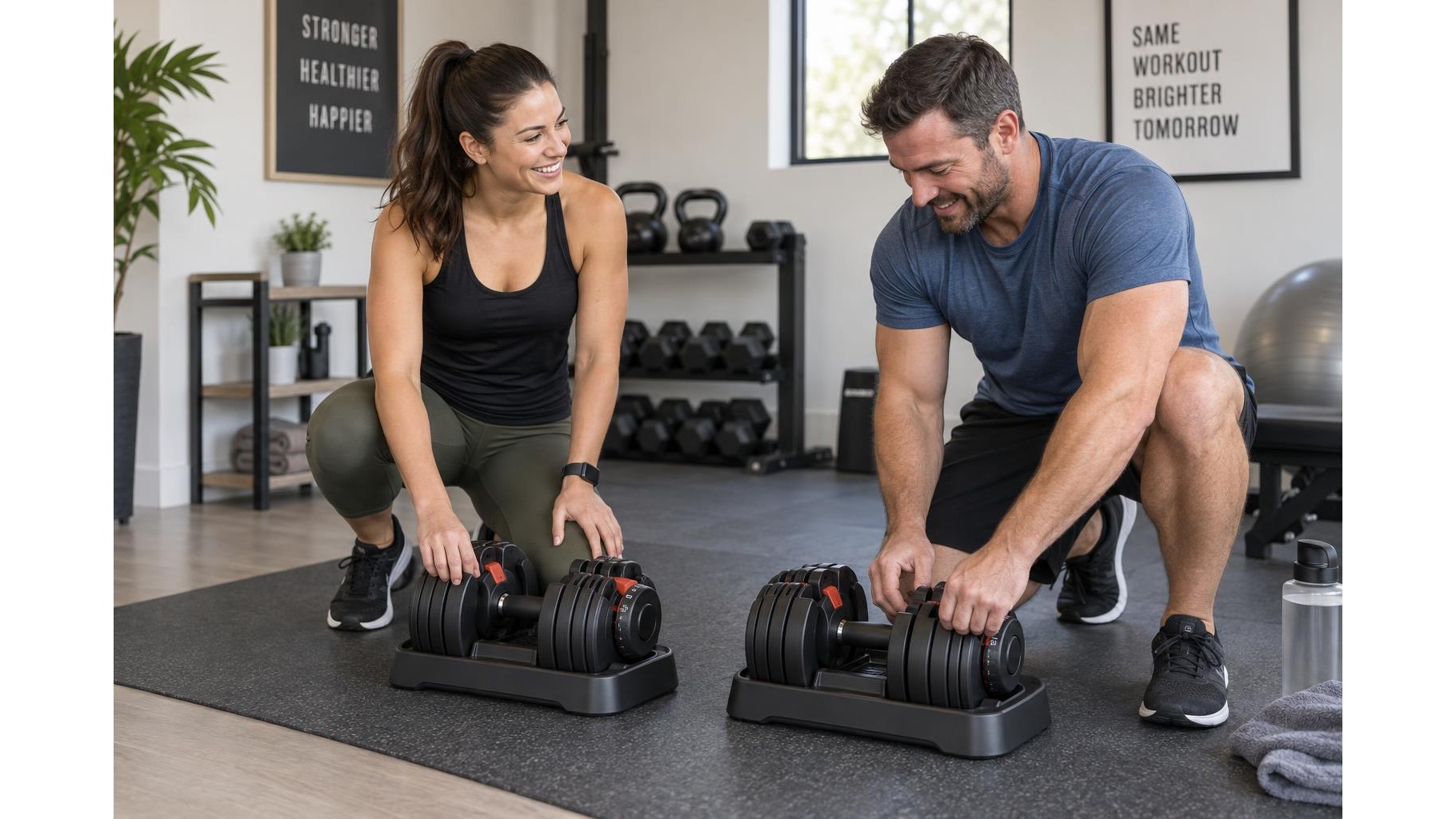
Selectorized dumbbells usually change load through a dial, selector pin or handle mechanism while the plates remain in a fitted tray. Dials can make transitions quick, which is useful when household members alternate sets, but check that the weight is selected on both ends and that the handle locks firmly before lifting. Pin systems can be straightforward, though they may take longer to adjust. Whatever the design, read the manufacturer’s instructions and never change the setting while the dumbbell is off its base unless the product specifically allows it.
Match weight increments to both users
Look beyond the maximum load. A high top weight is of little use to a beginner if the first available setting is already too heavy. Small increments are valuable for rehabilitation, isolation exercises and gradual progression; broader jumps may be acceptable for stronger lifters doing larger movements. Compare the complete range and each selectable step for one dumbbell, not just the combined pair weight. If users have very different strength levels, make sure the lower end is genuinely light enough and the upper end can support the stronger person’s planned exercises.
Check handle comfort and balance
The handle should feel secure without forcing an awkward grip. Consider its diameter, surface texture and usable length, especially if users have different hand sizes or prefer gloves. A deeply knurled handle may improve grip but feel abrasive during high-repetition work. Test whether the weight plates sit evenly and whether the dumbbell feels balanced at lighter settings as well as heavier ones. Also check the overall dimensions: a bulky head can limit range of motion in presses, curls or exercises performed close to the body.
Plan storage before purchasing
Measure the intended storage space and allow room to lift each dumbbell in and out of its tray without knocking nearby furniture. A dedicated cradle keeps selectorized parts aligned and helps prevent loose plates or handles becoming trip hazards. Confirm whether the tray is included and whether the set needs a flat, stable surface. Keep the equipment dry, away from children and pets, and out of walkways. Compact equipment still needs a consistent home so every user can return it safely after training.
Use household safety checks
Before each session, inspect the handle, selector, plates and tray for cracks, looseness or obstruction. Set the dumbbell down gently rather than dropping it; selectorized models are not necessarily designed for impact. Make sure the chosen setting is identical on both sides and that all locking indicators show engagement. Each household member should practise adjusting the weights and returning the dumbbell to its base before using it under load. Follow the product’s stated weight limits and care guidance, and stop using it if a component does not lock reliably.
Make the choice a shared decision
Compare adjustment speed, useful weight steps, grip comfort, footprint and safety features against how each person actually trains. Prioritise a manageable starting load and secure, repeatable adjustment over an impressive maximum number. A well-chosen pair can support varied workouts while keeping a home gym tidy, provided every user understands how to select, check and store it.