Designing a home cardio corner in a small living room often comes down to a choice: a foldable rowing machine or a compact treadmill. Both promise effective workouts without a gym membership, but they behave very differently in terms of space usage, noise, joint impact and overall training feel. In this guide, we compare these two categories using two popular examples – a typical foldable rower and a slim walking pad–style treadmill – to help you decide which fits your lifestyle, body and apartment layout.
Space and storage in a real living room
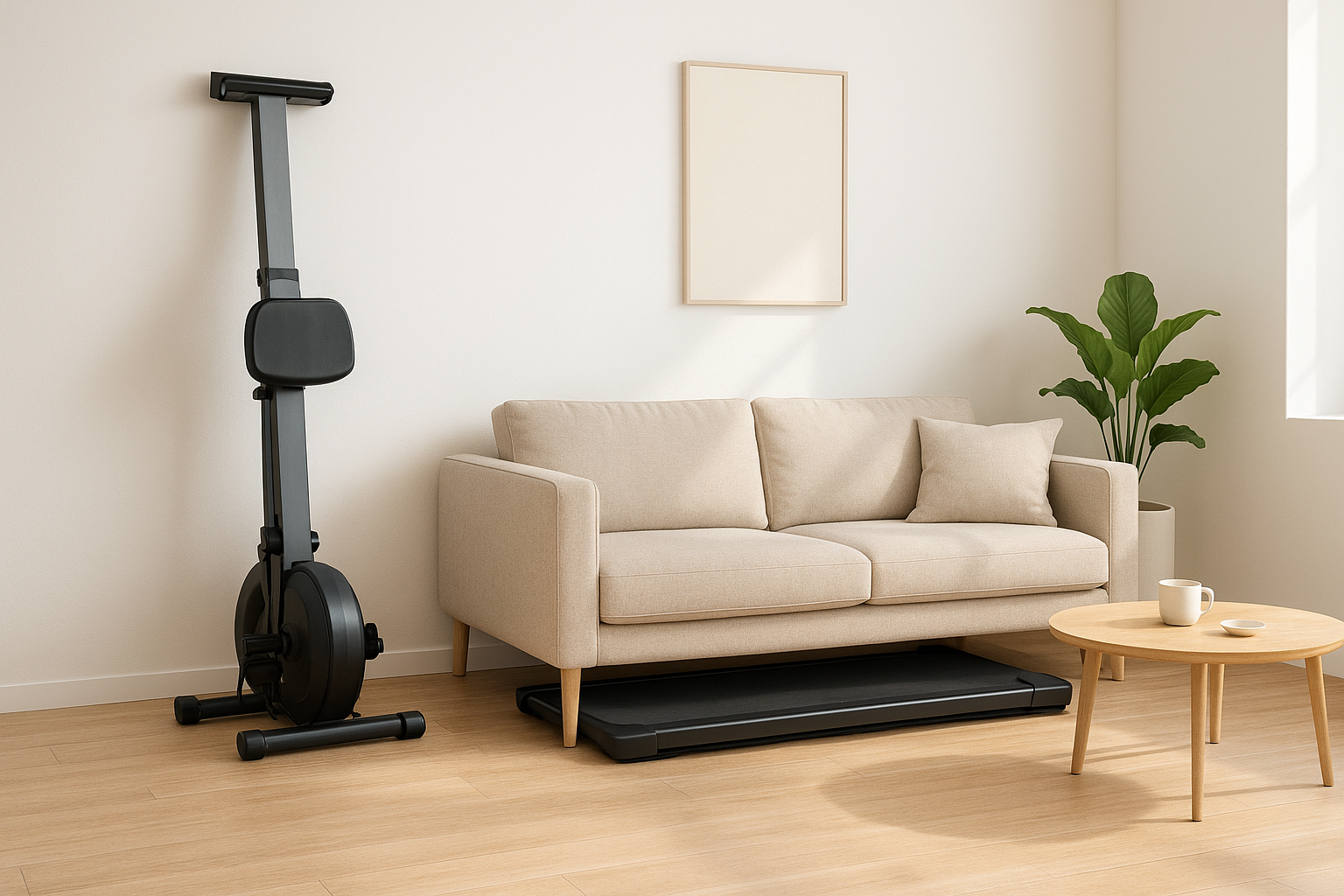
A key advantage of foldable machines is the ability to reclaim your living room once the workout is over. A standard foldable rowing machine (for example, a typical aluminium-frame, rail-and-seat model) usually stores vertically, taking up about as much floor space as a dining chair. Wheels on the front stabiliser let you roll it behind a sofa or into a corner. A compact treadmill, such as a slim walking pad design, folds almost flat and can slide under a bed or stand against a wall. Treadmills usually need a bit more permanent floor clearance when in use, especially behind the deck for safety, while rowers demand a longer but narrower footprint. If your living room is long and narrow, a rower may fit better; if you have low, unused under‑sofa space, an ultra‑slim treadmill is often easier to hide.
Noise levels and neighbour‑friendly training
In apartments with thin walls, noise is as important as size. Magnetic foldable rowing machines are generally very quiet: the main sounds are the sliding seat and handle movement, which produce a soft swish. This makes early‑morning or late‑night sessions more neighbour‑friendly. Compact treadmills, even with efficient brushless motors and cushioned decks, inevitably generate more sound: motor hum, foot strikes and some vibration through the floor. On thicker carpets the difference is reduced, but on hard floors the impact is noticeable. If you share walls or live above someone and plan to run rather than walk, a rower typically wins for low‑noise training; for light walking while you watch TV, a slim treadmill can still be discrete enough.
Impact on joints and overall training effect
For many home users, joint protection is a priority. A rowing machine offers low‑impact, full‑body cardio: the movement engages legs, core, back and arms with minimal stress on knees and ankles when technique is correct. This makes rowers excellent for users with a history of joint issues who still want intense sessions. A compact treadmill focuses primarily on the lower body. Even with shock‑absorbing decks, running creates repetitive impact; however, using it as a walking pad at moderate speeds can be very joint‑friendly and ideal for boosting daily step count. In terms of calorie burn, vigorous rowing tends to burn more per minute than casual treadmill walking, because more muscle groups are involved. But if you plan to clock long durations while watching movies or working at a standing desk, a compact treadmill is often easier to use for extended, low‑intensity sessions.
User profiles: who should pick which?
If your main goal is efficient, time‑saving workouts and you enjoy a sportier feel, a foldable rowing machine is usually the better match. It suits users who want to improve posture, strengthen the back and core, and perform intervals in short daily blocks. It also works well if you are cross‑training for outdoor rowing or other endurance sports. A compact treadmill is ideal for users who value incidental movement throughout the day: walking while on calls, adding steps after dinner or combining light cardio with streaming shows. It is also easier for beginners because the movement is familiar and requires less technique than rowing. If balance is an issue, a treadmill with safety rails and a remote control can feel more secure, whereas rowers keep you low to the ground but ask for good hip and core control.
Setup, maintenance and long‑term use
Both categories are designed for home use, but they differ in assembly and care. Foldable rowers usually arrive in a few main pieces: frame, rail, seat and handle system. Assembly is straightforward with basic tools, and maintenance involves keeping the rail clean, occasionally lubricating moving parts and checking bolts. Compact treadmills often come largely pre‑assembled: you unfold, lock the frame (if it has a handlebar), plug in and you are ready. Ongoing care means wiping sweat from the belt, checking belt tension and, for some models, periodic lubrication. Over time, a rower’s wear is mostly mechanical, while a treadmill adds motor and electronics to the equation. Whichever you choose, placing the machine on a protective mat reduces vibration, protects your floor and helps both devices last longer in a busy living room environment.
In summary, foldable rowing machines shine if you want quiet, full‑body, high‑intensity cardio that stores neatly in a corner, while compact treadmills are perfect for building daily steps and light jogging in a flexible, TV‑friendly setup. Think about your available floor space, neighbours, joint history and how you realistically like to move: intense, focused sessions favour the rower; long, easy walks favour the treadmill. Matching the machine to your habits will ensure your living‑room gym is not only compact, but also genuinely used.