A compact stair stepper can make it easier to fit low-impact cardio into a busy day, without needing much floor space. The stepping action is simple, but a comfortable workout depends on controlled movement, sensible resistance and a pace you can sustain. Use the guidance below to set up, find a steady rhythm and build up gradually. If you have a health condition, balance concerns or pain when exercising, check with a healthcare professional before starting.
Set a comfortable step height
Start with the machine on a stable, level surface, with enough room around it to step on and off safely. Compact steppers may have a limited range of motion; aim for smooth, modest presses rather than trying to drive each pedal as low as possible. Keep the movement controlled in both directions and avoid bouncing at the bottom of the stroke. If your model allows resistance or stride adjustment, begin at its easiest comfortable setting. The goal is a repeatable step that feels gentle on your joints, not a deep squat or a race against the pedals.
Use relaxed, upright posture
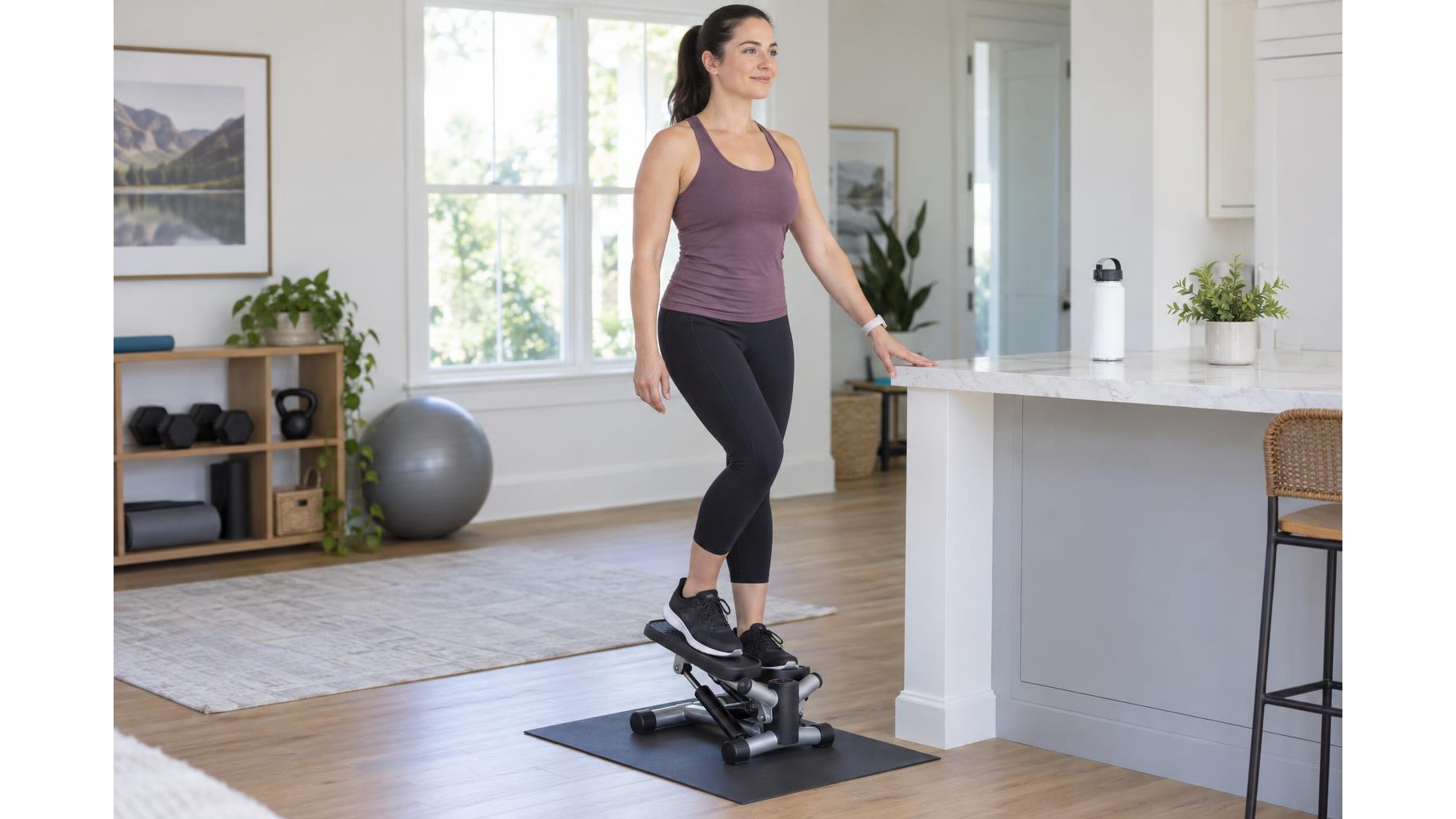
Stand tall with your head facing forward, shoulders relaxed and ribs comfortably stacked over your hips. Keep a slight bend in your knees and let your feet rest securely on the pedals, rather than hanging your heels or balancing on your toes. Brace your middle gently as you move, but keep breathing normally. Try to press through the whole foot and maintain an even rhythm on both sides. If you find yourself leaning forward, shrugging or twisting, slow down and reset your stance before continuing.
Choose hand support without leaning
If you need extra balance, place the stepper near a sturdy counter or a fixed support that will not slide. Rest your fingertips lightly rather than pulling your body weight through your arms. Some models include resistance bands or handles; use them only as directed and avoid using them as a substitute for stable footing. Support should help you feel secure while your legs do the stepping. If you cannot keep your torso upright without gripping hard, reduce your pace or pause. Never use a wheeled chair, loose table or other unstable object for balance.
Control effort with an easy test
For a beginner-friendly session, use effort as your guide instead of chasing a particular speed. You should be able to speak in short sentences while stepping, with breathing faster but still controlled. Start with three minutes at an easy pace, then do four rounds of one minute at a slightly brisker pace followed by one minute easy. Finish with two to three minutes of gentle stepping, then step off carefully and allow your breathing to settle. This gives you roughly thirteen to fourteen minutes of movement, including recovery, without making every minute feel demanding.
Progress with sustainable intervals
Repeat the session two or three times a week if it feels comfortable, leaving recovery time between harder workouts. After a week or two, add one brisk interval or extend the easy warm-up by a minute; change only one element at a time. Keep the brisk sections controlled, not all-out, and make the recovery long enough that you regain comfortable breathing. If your form deteriorates, your knees feel uncomfortable or you cannot speak a few words, ease off or stop. Consistency matters more than punishing intervals, and even a short session can be useful when it fits your routine.
A compact stepper works best as a steady, adjustable cardio option: use a modest step, stay upright, take only the support you need and choose intervals that leave you ready to come back. Begin conservatively, pay attention to how you feel during and after each session, and increase the workload gradually. With controlled movement and realistic effort, home stepping can become a practical part of a broader fitness routine.