Compact sandbag training kits are one of the most space‑efficient ways to add dynamic, real‑world strength work to a home gym. Unlike fixed dumbbells or kettlebells, a sandbag shifts, sloshes and challenges your stabilisers, mimicking the demands of everyday lifting. With a single kit you can train strength, power and conditioning in a very small footprint, making it ideal for apartments or multi‑use rooms.
Why compact sandbag kits work so well at home
A good compact sandbag takes up about as much room as a small gym bag yet replaces a whole rack of weights. Because most kits use removable filler bags, you can adjust load in seconds, moving from light conditioning work to heavy strength sets without cluttering your space. The shifting weight forces your core, hips and upper back to stabilise every rep, so even basic movements like squats, presses and carries become full‑body challenges. For home users, the added benefit is safety: if you drop a sandbag, you are far less likely to damage floors or equipment compared with iron plates.
Choosing the right weight range for your goals
When selecting a sandbag kit weight range, think in terms of your strongest lifts and your primary goal. For beginners under 70 kg focused on general fitness, a kit adjustable from about 5–25 kg usually covers most needs. Stronger or more experienced lifters may prefer a range up to 30–40 kg for squats, hip hinges and carries. Because the bag feels heavier than the same weight in a barbell or dumbbell due to the unstable load, err on the lighter side if unsure. Look for kits that include multiple filler bags so you can fine‑tune increments without having to buy a second bag immediately.
Handle configurations and what they are best for
Handle layout dramatically changes how a sandbag trainer performs. Compact home‑gym models often feature a pair of neutral handles on top for cleans and presses, wide grab handles on the ends for carries, and sometimes suitcase‑style handles along the sides. More handles increase exercise variety but can create pressure points if they are poorly padded. For small spaces, a bag with top and end handles is usually enough, allowing you to perform deadlifts, rows, presses, lunges and various carry patterns without needing extra attachments. Prioritise reinforced stitching and strong webbing so handles do not tear under dynamic movements like shouldering or swings.
Filler options, materials and safety tips
Most home sandbag kits ship without sand, so you will typically fill them with play sand or kiln‑dried sand from a DIY store. Some users mix in rubber crumb to keep the bag a little softer and reduce impact on the floor. Make sure inner filler bags are double‑stitched and use strong Velcro closures or zips to avoid leaks. The outer shell is often heavy‑duty nylon or canvas; a tougher fabric resists abrasion during drags and outdoor use. For safety, avoid overfilling the bag; leave some space so the sand can move. Always warm up thoroughly before heavy swings or shouldering work, and clear at least a couple of metres around you so you do not hit furniture or walls in tight spaces.
A sample full‑body sandbag workout for small spaces
With one compact sandbag you can build a complete routine in just a few square metres. Try this circuit two to three times per week:
- Sandbag deadlift to high pull – 8 reps
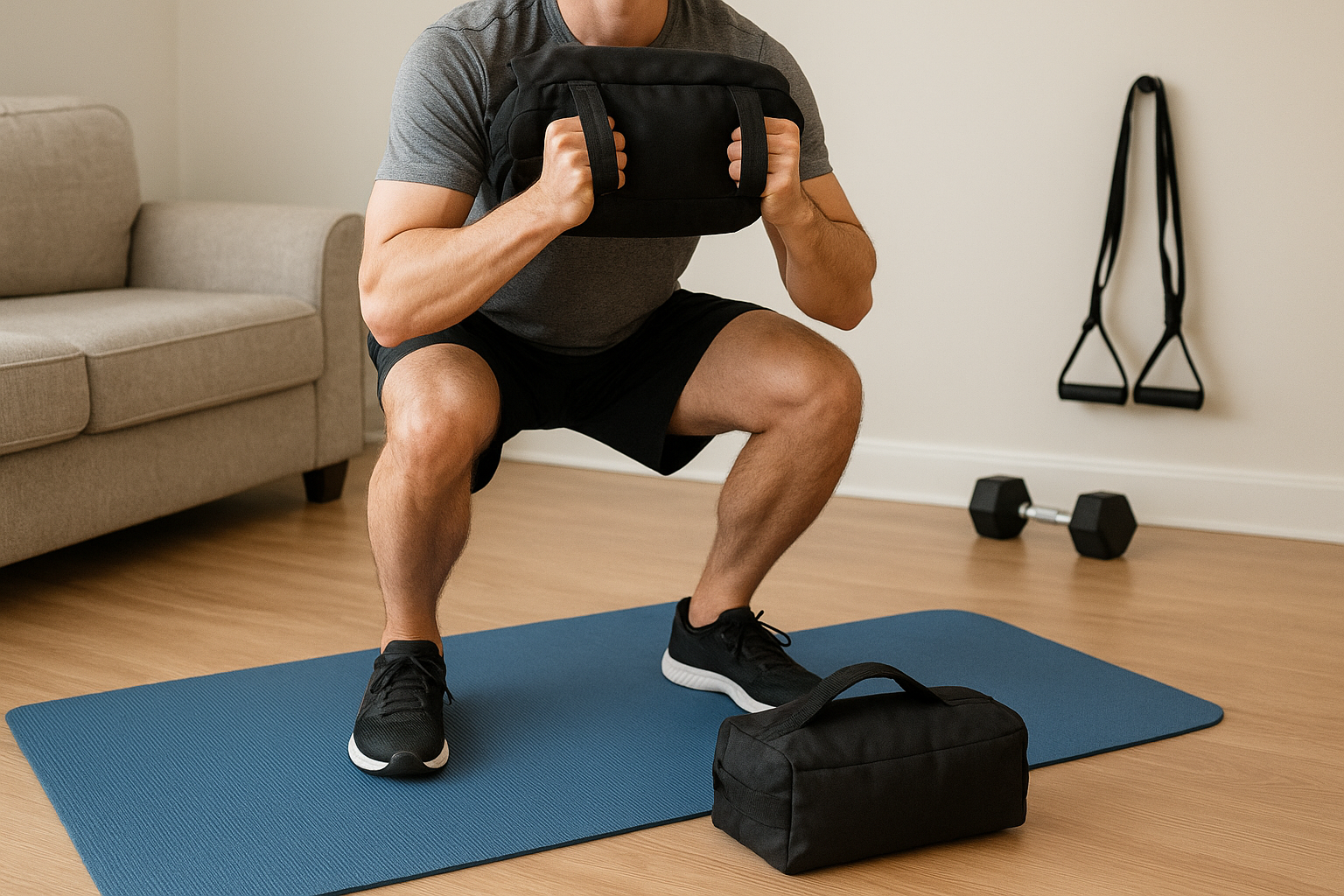
- Front‑loaded sandbag squat – 10 reps
- Push‑up with one hand on the sandbag – 8 reps each side
- Shoulder sandbag carry (pace in place if needed) – 30 seconds each side
- Half‑kneeling sandbag press – 8 reps each arm
- Core: sandbag drag plank – 6 drags each side
Perform 3–4 rounds, resting 60–90 seconds between rounds. Adjust the load so the final reps are challenging but technically clean. Over time, you can progress by adding weight, rounds or more complex movements such as cleans, lunges with rotation or overhead carries, all while staying within the confines of a modest home setup.
In summary, compact sandbag training kits offer a uniquely versatile and space‑saving solution for building strength, power and conditioning at home. By choosing an appropriate weight range, sensible handle layout and durable filler system, you can enjoy a huge exercise library with just one piece of equipment. Combined with smart safety habits and efficient full‑body circuits, a sandbag can become the cornerstone of your home gym, delivering challenging, functional workouts without requiring a dedicated training room.