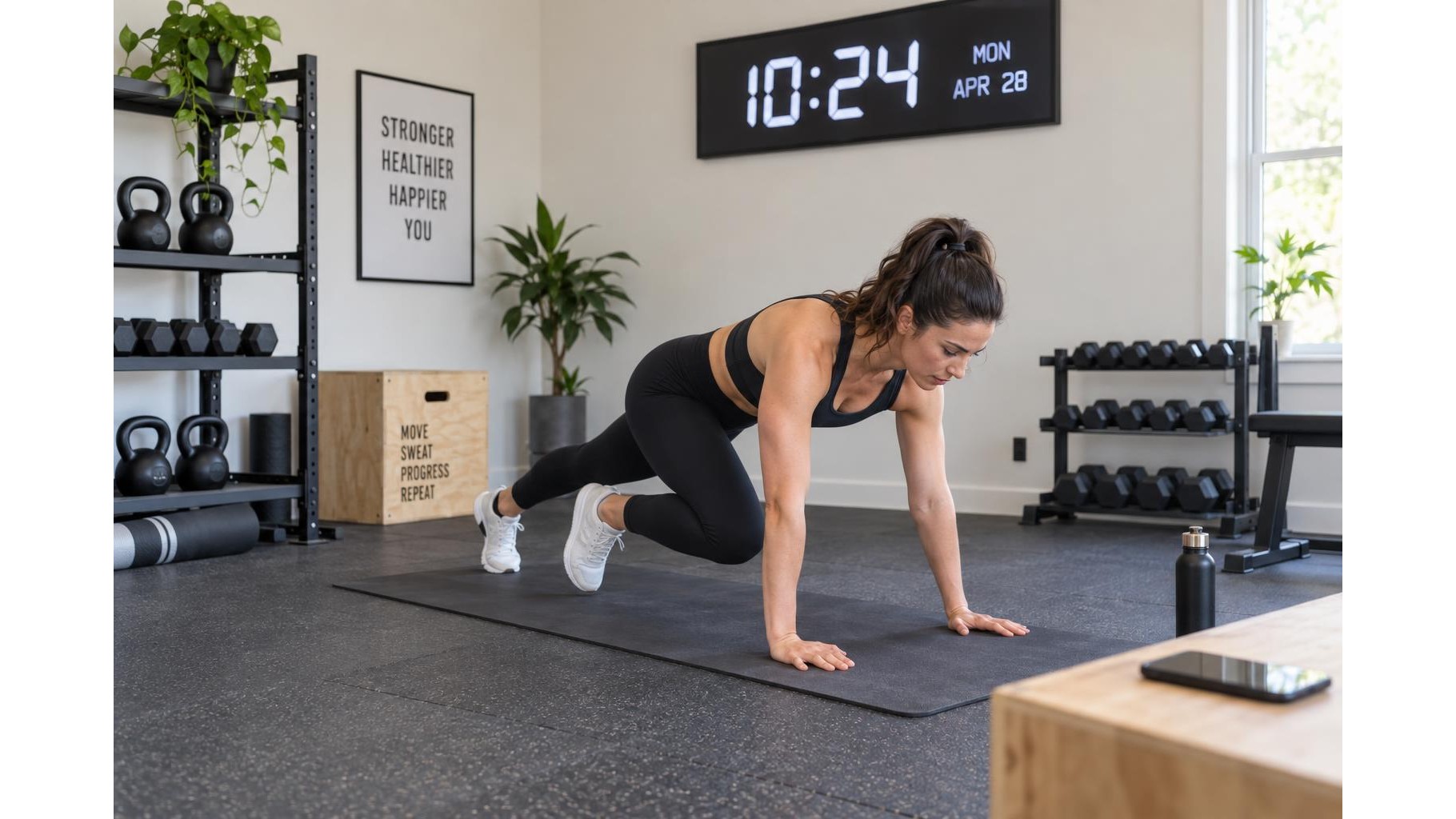
A phone can be useful for music and workout plans, but reaching for it between intervals makes it easy to lose focus. A digital wall clock offers a simple alternative: glance up to check the time, then keep moving. With a clear view and a basic plan for work and rest, you can pace strength circuits and cardio sessions without a screen in your hand.
Place the clock within your natural line of sight
Choose a wall that you can see from the main workout area without turning around or stepping away from your equipment. For floor exercises, check the view while lying down; for standing circuits, make sure the display is visible from an upright position. Mount the clock securely and high enough to avoid being blocked by weights, a bench, or other people. Avoid direct glare from windows and bright lights, which can make digits harder to read. A useful placement lets you check the time with a quick glance, not a change of position.
Choose intervals before you begin
Decide how long each work period and recovery period will last before starting. For example, a beginner circuit might use 30 seconds of movement followed by 30 seconds of rest, repeated for several rounds. Cardio intervals could use one minute of brisk effort and one minute of easy movement. Write the sequence on paper or memorise a short pattern, then use the clock to track elapsed time. This removes the need to unlock a phone, find a timer, or navigate notifications while your heart rate is up.
Use a consistent method to track each round
A clock displays the current time, rather than automatically announcing each interval, so make the timing method easy to follow. Start a round at a clear minute mark and work for a set duration; begin the next round at the next planned mark. For shorter intervals, use the seconds display and agree on a simple cue, such as starting each effort when the seconds reach zero. Keep the number of rounds modest at first. A repeatable pattern is easier to follow than a complicated schedule when you are tired.
Prioritise readability and useful display features
For training, legibility matters more than decoration. Look for large digits, strong contrast, and a display that remains visible across your room. A seconds display is particularly helpful for short work-rest cycles, while a 12- or 24-hour format is mostly a matter of preference. Consider whether the clock needs a mains connection or batteries and whether its brightness will suit the room at different times of day. If you use the room for relaxation too, a dimmable display can help prevent excess light at night.
Match timing to the demands of your session
Strength circuits benefit from enough recovery to maintain safe technique. Use the clock to keep rest periods consistent, but do not rush a lift if you need more time to regain control or prepare equipment. For cardio, intervals can be more regular: alternate effort and recovery for a planned number of rounds, then finish with an easy cooldown. Keep water and any written workout plan close by, but leave your phone out of reach if you do not need it. Stop or adjust the session if you feel unwell, dizzy, or unusually breathless.
Make the clock part of a simple routine
Before each workout, check that the clock is visible, confirm the time, and review your interval plan. Start with a warm-up, follow the chosen work-rest pattern, and finish with a cooldown. If you repeatedly miss interval changes, make the sessions simpler or choose longer blocks rather than adding more distractions. A wall clock will not replace a dedicated interval timer when you need automatic alerts, but it can support straightforward sessions while helping you stay present.
In short, a clearly positioned digital wall clock can make home workouts easier to pace without constant phone checks. Choose a readable display, plan your intervals in advance, and use a consistent timing pattern. Keep rest appropriate to the exercise, and let good technique—not the clock alone—set the pace.