
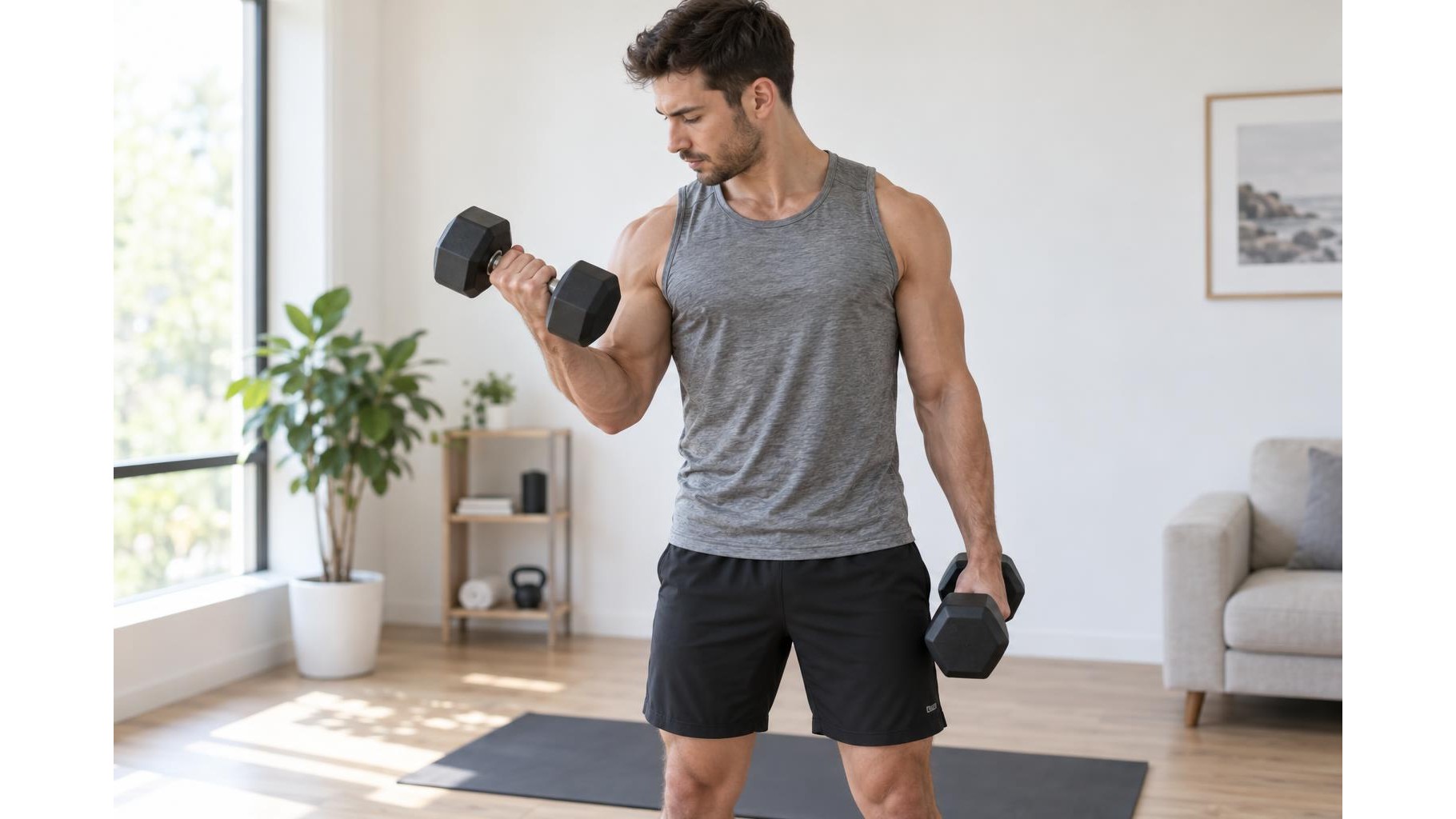
Choose a vest that works with your workout
A lightweight training vest can be a comfortable choice for indoor strength sessions, especially when you want a breathable top that leaves your shoulders free. The best option is not necessarily the thinnest or most fitted: it should stay in place through presses, rows and floor exercises without trapping heat or getting in the way. Look at fabric weight, arm openings, hem length and pocket design together, then check how the garment feels during the movements you actually do at home.
Consider fabric weight and feel
Fabric weight affects warmth, drape and how quickly a vest feels damp. A light, breathable knit is often suitable for a warm room or a session with short rests, while a slightly denser fabric may feel more substantial and less likely to cling. Check the fabric composition and care label rather than relying on words such as “lightweight” alone. Smooth, soft material can reduce irritation under the arms, but very thin fabric may become transparent when stretched or show sweat more readily. If possible, check customer feedback for notes about opacity, shrinkage and how the material holds its shape after washing.
Check arm openings and shoulder movement
Armholes should give you room to move without exposing more than you find comfortable. Openings that are too tight may rub during lateral raises or restrict your reach; very deep openings can shift during floor work and allow the fabric to catch on equipment. Raise both arms overhead, reach across your body and perform a few unloaded presses. The vest should not pull sharply across the chest or gape excessively at the sides. A well-shaped shoulder seam and enough room through the upper back help keep the garment comfortable as your range of motion changes.
Get the hem length right
A vest should cover your waist when you bend, reach and lie back, without bunching beneath your hips. A longer hem may offer useful coverage for bent-over rows or exercises on a mat, but excess fabric can ride up or gather under a bench. A shorter cut can feel cooler and less restrictive, provided it stays in place when you lift your arms. Try a few basic movements in the vest before deciding: hinge at the hips, squat, reach overhead and lie down. Notice whether the hem moves enough to distract you or expose skin when you would prefer coverage.
Keep pockets simple for strength work
Pockets are optional for indoor training. A phone pocket may be handy for music or a workout timer, but anything that swings, presses into your body or shifts during a set can become annoying. For dumbbell exercises and floor movements, a pocket-free design is often the simplest choice. If you do want storage, look for a small, secure pocket that sits close to the body and does not interfere with your range of motion. Avoid carrying keys or other hard objects while exercising, particularly during exercises performed on your back or stomach.
Fit, washing and when to wear one
Choose a fit that skims the body without feeling tight across the chest or armholes. Follow the brand’s size chart and compare it with a garment you already like; sizing labels are not consistent between makers. Wash the vest according to its care label, using a suitable temperature and avoiding excessive heat if the fabric contains elastane. Air-drying can help preserve stretch and shape. A vest is a useful layer when your room is warm, you want free shoulder movement or you need a simple top for training. It is unnecessary if your regular workout shirt already feels cool, secure and comfortable.
A practical final check
Before buying, prioritise breathable fabric, comfortable arm openings and a hem that stays put through your usual exercises. Treat pockets as a convenience, not a requirement, and check washing instructions alongside fit. The right lightweight training vest should support your indoor strength session without demanding attention. For an example of the style to compare, browse lightweight training vests on Amazon UK, then use the sizing chart and garment details to judge whether a particular option suits your routine.









