
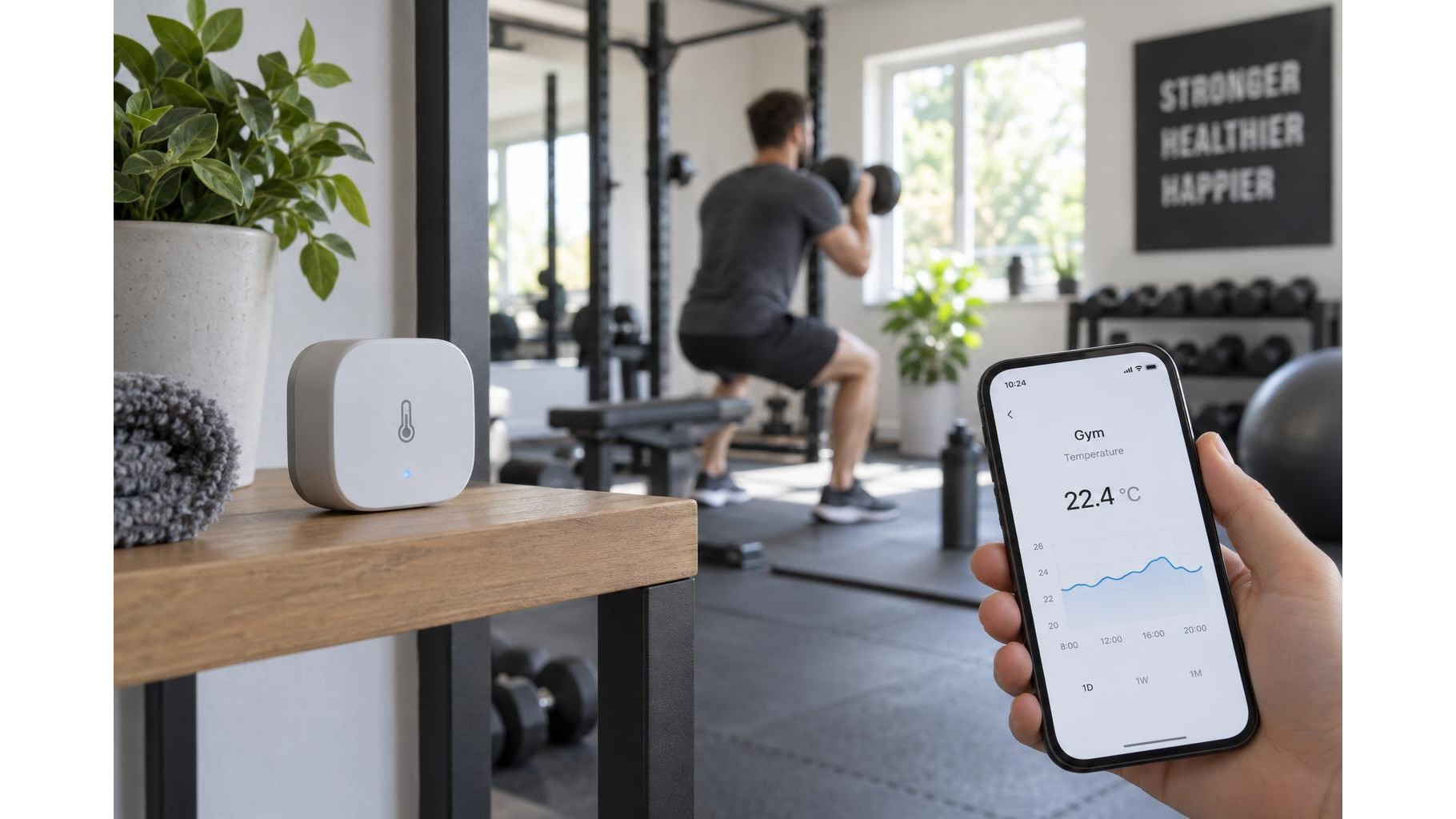
A Bluetooth temperature sensor can give you a clearer picture of the conditions in your home gym, helping you decide when to open a window, change clothing or take a longer rest. It is a practical comfort tool, not a measure of fitness or a substitute for listening to your body. Used thoughtfully, its readings can help you make indoor training more comfortable and consistent.
Choose a useful place for the sensor
For readings that reflect the space where you exercise, place the sensor near your training area but away from direct sunlight, heaters, air-conditioning outlets and open windows. Keep it off the floor and avoid putting it right beside equipment that produces heat. A shelf or wall mount around chest height is often a reasonable starting point. If your gym has distinct zones, take a few readings in different spots before choosing a permanent location. The aim is to measure the room, not a pocket of unusually warm or cool air.
Learn what the app can tell you
Most Bluetooth temperature sensors pair with a phone app and display current readings; some also track humidity, record trends or send alerts when a threshold is crossed. Check how often the sensor updates and whether it stores readings when your phone is out of range. A simple history graph can be useful: compare the room before and after a workout, or see whether ventilation makes a noticeable difference. Set alerts as reminders to check conditions, rather than automatic instructions to stop or continue exercising.
Use readings to plan ventilation
Check the room before training and again during longer sessions. If it feels stuffy or the temperature is climbing, consider opening a window or door when it is safe and practical. A fan can improve air movement and perceived comfort, although it does not lower the room’s measured temperature in the same way as air-conditioning. Avoid relying on one sensor reading alone: outside weather, airflow, humidity and the intensity of your workout all affect how warm you feel. Use the sensor as one useful part of a ventilation routine.
Adjust clothing and breaks sensibly
Room readings can help you choose lighter or warmer layers before you start, especially when your gym changes temperature through the day. Keep a towel and water nearby, and take breaks when needed. A warm room may make a familiar workout feel less comfortable, but a particular number does not determine what clothing is right for everyone. Consider your own comfort, the exercise you are doing and how you feel as the session progresses. If you become unwell, stop and take appropriate steps rather than waiting for an app notification.
Understand the limits of temperature data
A room sensor does not measure core body temperature, hydration, heart strain or workout quality. Its reading may also differ from the conditions around your body, especially near a fan, window or sunlit wall. Treat temperature history as environmental context, not as performance feedback or a score. Bluetooth range, battery life and sensor accuracy vary by device, so check the manufacturer’s instructions and compare the reading with another reliable thermometer if it seems implausible. Do not use a consumer sensor to make medical decisions.
In short, a Bluetooth temperature sensor can help you spot patterns and plan small changes to your home gym. Place it thoughtfully, use app trends and alerts as prompts, and combine the data with your own comfort and sensible ventilation. The best result is a more pleasant training space—not a number to chase.









