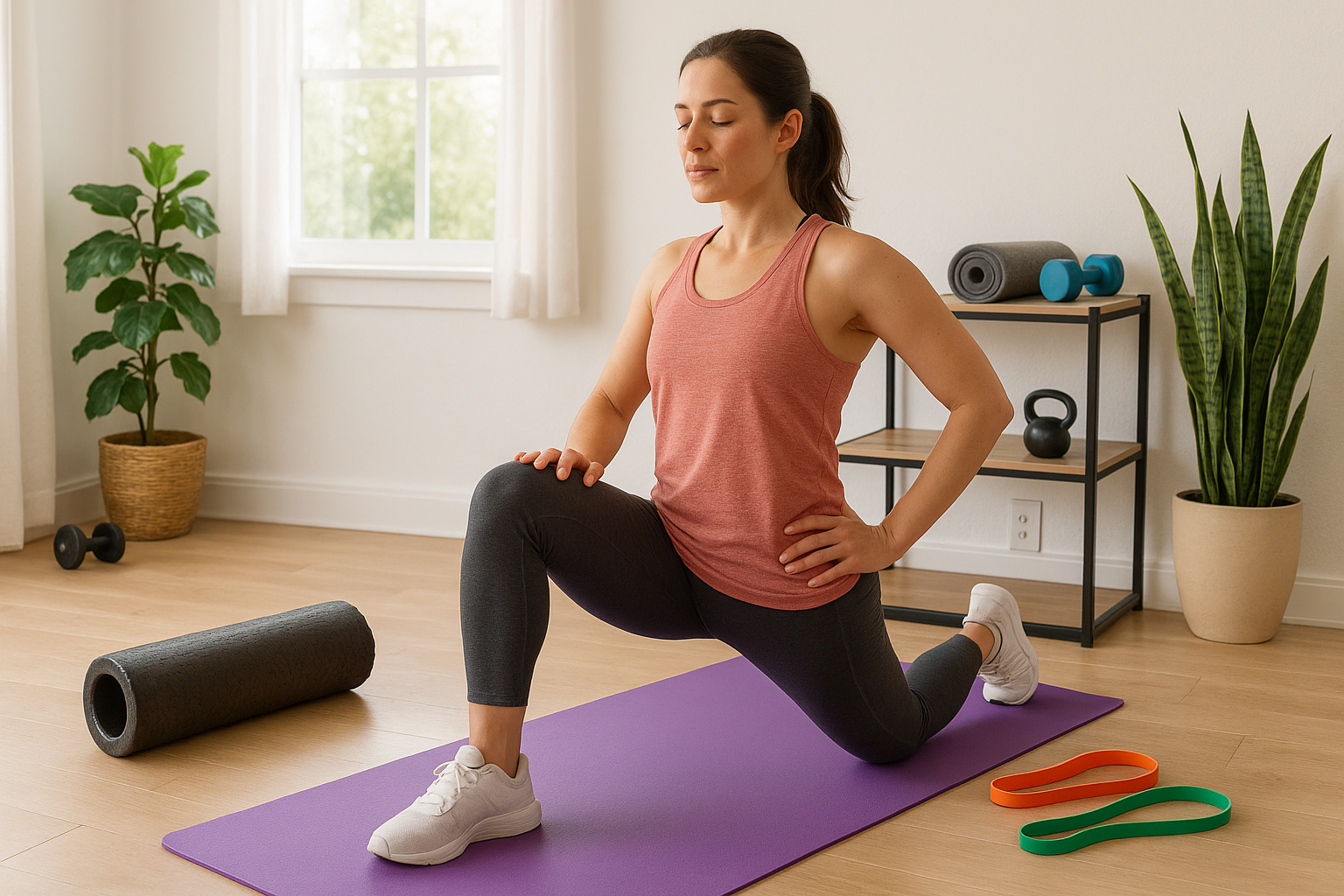
After a tough home workout, it’s tempting to hit the shower and get on with your day. But skipping a structured mobility and stretching routine is one of the fastest ways to build up stiffness, soreness and unnecessary joint stress. With just 10–15 minutes and minimal space, you can create a simple sequence that helps you move better, recover faster and stay consistent with your training over the long term.
Why post-workout mobility matters
When you train at home, you often repeat the same patterns: squats, presses, rows and core work. Over time this can leave muscles tight and joints feeling cranky. A short post-workout mobility routine improves flexibility, restores joint range of motion and encourages blood flow to fatigued muscles, which can reduce DOMS (delayed onset muscle soreness). It also helps your nervous system shift from a high-intensity state to recovery mode, lowering tension and stress. Think of mobility as “maintenance” for your body: a small investment after each workout that keeps you training pain‑free instead of constantly dealing with niggles and tweaks.
Essential principles for an effective routine
To keep things simple and sustainable, aim for a routine that is repeatable, covers the major joints (hips, spine, shoulders and ankles) and mixes dynamic mobility with static stretching. Start with gentle, controlled movements (like hip circles or arm swings) while your muscles are still warm, then finish with longer holds of 20–40 seconds for key tight areas such as hip flexors, hamstrings and chest. Breathe deeply through the nose, exhaling slowly to encourage relaxation. Avoid aggressive bouncing or forcing range of motion; slight discomfort is fine, sharp pain is not. Consistency beats complexity, so a basic 10–15 minute sequence done after every home workout will outperform a one‑off 30‑minute stretching session.
A simple 10–15 minute sequence you can follow
Begin with 2–3 minutes of dynamic mobility: bodyweight squats with reach, cat‑camel spine flexion and extension, and gentle lunges with an overhead arm stretch. Next, move into 6–8 minutes of targeted stretches: a half‑kneeling hip flexor stretch on each side, a seated hamstring stretch, and a lying figure‑four stretch for the glutes. Add an open‑book thoracic rotation by lying on your side, knees bent, and rotating the top arm across your body to open the chest. Finish with 2–3 minutes of chest and shoulder stretches against a wall or doorframe and some easy neck mobility (slow nods and rotations). This template covers your whole body without feeling overwhelming, and you can adjust hold times depending on how you feel.
Minimal equipment to upgrade your mobility work
While you can perform this routine with just your bodyweight, a couple of low‑cost tools can make home mobility training more comfortable and effective. A supportive yoga mat helps protect your knees and spine on hard floors, encouraging you to spend more time in positions like lunges and lying stretches. A basic foam roller can be used for light self‑massage on your quads, calves and upper back before you stretch, helping muscles relax and improving your body awareness. A compact set of resistance bands is also useful for gentle joint distraction and activation work around the hips and shoulders. Choose durable, well‑reviewed products and keep them stored near your training area so they become a natural part of your post‑workout ritual.
How to fit mobility into a busy schedule
The best stretching routine is the one you actually do. To make it stick, attach your mobility session directly to the end of your workout with a hard rule: training isn’t finished until you’ve completed at least 10 minutes of cool‑down work. Set a timer, follow the same simple sequence most days, and only add extra drills once the habit is solid. If time is tight, prioritise hips and spine on lower‑body days and shoulders and upper back on upper‑body days. Over weeks, you should notice easier depth in squats and lunges, smoother overhead pressing, and less morning stiffness. Treat this as part of your long‑term joint health plan rather than an optional extra.
Building a simple, consistent mobility and stretching routine after your home workouts doesn’t require complicated programming or expensive equipment. By focusing on key joints, combining dynamic movements with targeted stretches and using a few basic tools for comfort and support, you can significantly improve flexibility, reduce soreness and protect your joints over time. Commit to 10–15 minutes after each session and you’ll turn recovery from an afterthought into a powerful ally that keeps your home training enjoyable, sustainable and pain‑free.