
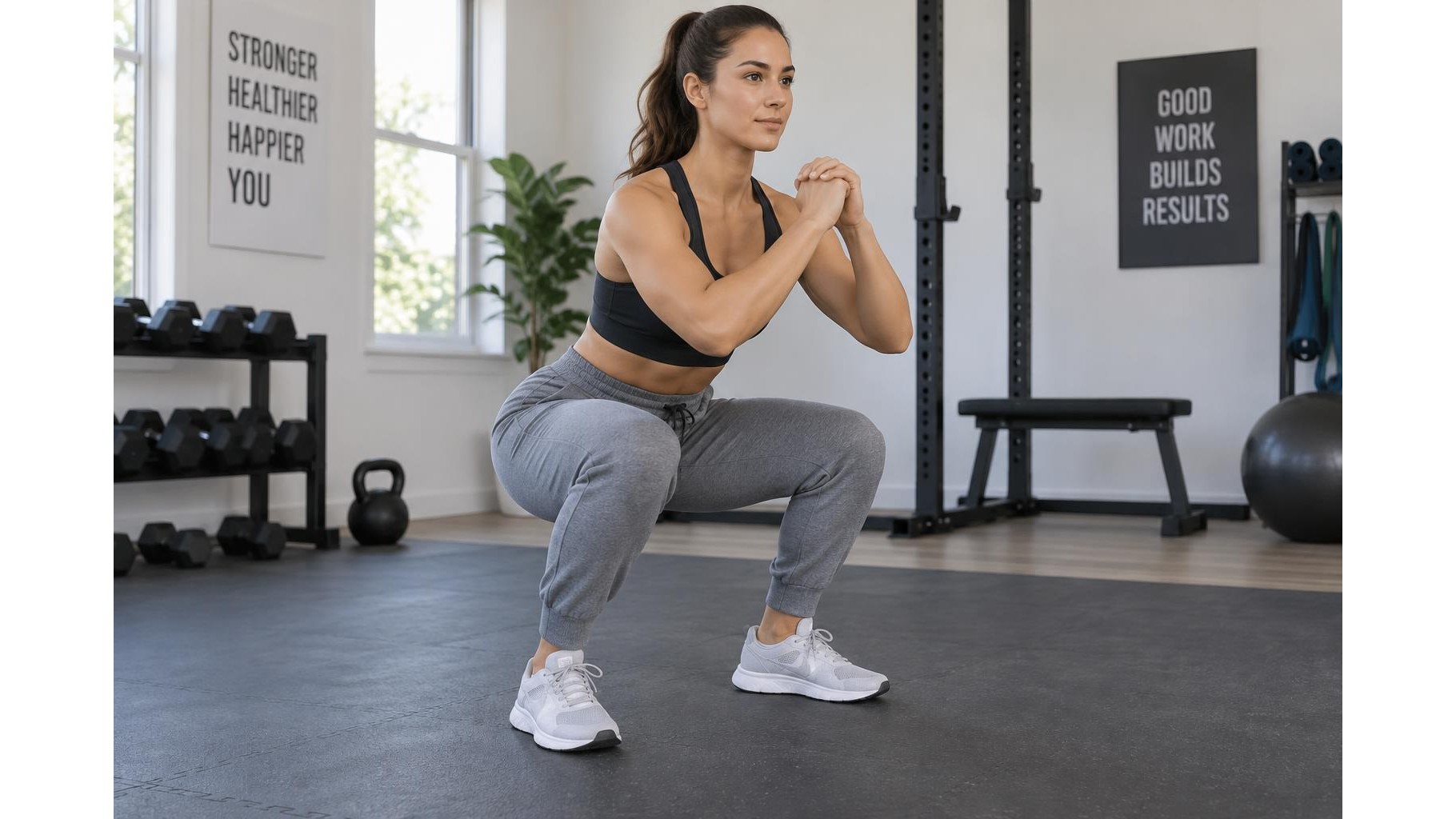
Training joggers should feel comfortable while you warm up, but they also need to stay out of the way when you squat, lunge or work on the floor. The best pair balances stretch, secure coverage and easy movement without feeling restrictive or bulky. Use these practical checks to compare fabric, waistband, inseam, pockets and cuffs before choosing joggers for home strength sessions.
Look for stretch that moves in every direction
Fabric affects how freely joggers move and how comfortable they feel as your workout heats up. A stretch blend with elastane or another flexible fibre can make deep squats and wide lunges easier than stiff, non-stretch fabric. For strength workouts, look for material that stretches with your body and recovers its shape rather than sagging at the knees after repeated reps. A lightweight, breathable knit can help manage warmth indoors, while a thicker fabric may offer more coverage and a less revealing fit during bends. Check the fabric description, but also test the garment with a squat and a hip hinge if you can. It should move without pulling sharply across the seat or thighs, and should not become see-through under tension.
Choose a waistband that stays put
A comfortable waistband should hold the joggers in place without digging in when you brace your core or fold forward. A wide elastic waistband often spreads pressure more evenly than a narrow one. A drawcord can help fine-tune the fit, especially if your waist and hip measurements fall between sizes, but it should not create a hard knot that presses into your stomach during floor exercises. Check whether the cord is internal or external and whether the waistband rolls when you bend. The right fit feels secure through repeated squats and lunges without needing constant adjustment. Avoid sizing down just to make the waist feel snug: excessive tension can restrict breathing and make movement less comfortable.
Match inseam and rise to your movements
Inseam length changes how joggers sit during exercise. A longer leg may offer more coverage, but excess fabric can bunch around the ankle or catch under your heel during lunges. A shorter inseam can feel cooler and less restrictive, though it may ride up during floor work. Consider your height, preferred fit and the joggers’ stated inseam rather than relying on a size label alone. The rise matters too: enough coverage through the seat helps the garment stay comfortable in a deep squat. Try a few bodyweight reps and check that the crotch does not pull and the hem does not interfere with your feet.
Assess pockets for security and comfort
Pockets are useful for carrying a phone or keys between sets, but their placement and depth affect how joggers feel. Deep pockets with secure openings help keep small items from slipping out as you move. Zipped pockets add security, though bulky zips or hardware may press against your hands or hips during floor exercises. If you plan to keep your phone in a pocket while training, test whether it swings, pulls the fabric down or gets in the way during lunges. For focused strength sessions, a streamlined design with pockets that lie flat is often more comfortable than oversized pockets that add bulk.
Pick cuffs that suit your training space
Cuffs help keep hems away from your feet, which can be useful during squats, lunges and transitions to the floor. Elasticated cuffs offer a close fit, but they should not feel tight around your ankles or restrict circulation. Open hems provide a looser feel and can suit those who dislike elastic, although they are more likely to drag or bunch. Compare the cuff opening with your footwear and check that the fabric stays clear of your heel. Also consider how the joggers feel when you kneel or sit: a cuff that rides up uncomfortably may distract from floor exercises. Prioritise a finish that stays in place without pinching.
For home strength workouts, choose joggers that combine flexible fabric, a stable waistband, a suitable inseam, practical pockets and comfortable cuffs. Fit matters more than a particular style: test the movements you train most, check coverage and make sure nothing needs constant adjusting. A pair that stays comfortable through squats, lunges and floor work can make it easier to focus on your session.









